
Or try one of the following: 詹姆斯.com, adult swim, Afterdawn, Ajaxian, Andy Budd, Ask a Ninja, AtomEnabled.org, BBC News, BBC Arabic, BBC China, BBC Russia, Brent Simmons, Channel Frederator, CNN, Digg, Diggnation, Flickr, Google News, Google Video, Harvard Law, Hebrew Language, InfoWorld, iTunes, Japanese Language, Korean Language, mir.aculo.us, Movie Trailers, Newspond, Nick Bradbury, OK/Cancel, OS News, Phil Ringnalda, Photoshop Videocast, reddit, Romanian Language, Russian Language, Ryan Parman, Traditional Chinese Language, Technorati, Tim Bray, TUAW, TVgasm, UNEASYsilence, Web 2.0 Show, Windows Vista Blog, XKCD, Yahoo! News, You Tube, Zeldman
yahoo.com/news Top Stories
yahoo.com/news Top Stories'They're babies': Oregon mourns 3 children killed in elementary school shooting 16 Oct 2026, 9:33 am
A 16-year-old forced his way through locked doors at Silver Rail Elementary School in Bend, Ore., on Thursday and opened fire, killing three children and a teacher, police say.
The children were 5, 8 and 11 years old, Bend Police Department Chief Mike Krantz said during a press conference Thursday evening.
The suspect was shot and killed in the school by a member of the community who saw the shooter enter the building, Krantz said. Oregon Gov. Tina Kotek praised the bystander for "heroically" intervening and stopping further loss of life.
"Your actions carry a heavy emotional burden, and I just want you to know that my thoughts are with you as well," Kotek said.
A 7-year-old child and a 54-year-old teacher were also sent to a hospital with critical injuries.
Police did not release the names of the victims or the shooter.
Krantz did not say what kind of gun the suspect used, although a law enforcement official briefed on the shooting told the Associated Press that it was a pump-action shotgun.
How the shooting unfolded

Deschutes County dispatch received reports of an active shooter at 12:59 p.m. local time, from a person in a vehicle outside the school who said they had been shot at multiple times by someone with a long gun, according to Krantz.
The suspect entered the school after shooting through locked doors. Law enforcement officers were alerted at 1 p.m. and the school went into lockdown at 1:01 p.m.
Officers arrived at the scene at 1:02 p.m. and, moments later, an officer reported that a suspect had been shot by a community member. Federal law enforcement sources told Fox News the bystander had a concealed carry permit.
"Our hearts are broken," said Bend Mayor Melanie Kebler during the press conference. "A school should be a safe place where children can learn and feel secure. What happened today should never happen."
"We are stunned and heartbroken by this senseless tragedy," Bend-La Pine Schools Superintendent Steven Cook wrote in a statement. "We extend our deepest sympathy to the families and to everyone affected by this violence. No words can adequately express the grief our community is experiencing. Our immediate priorities are caring for our students and staff and assisting law enforcement and emergency responders."
FBI Director Kash Patel said the agency was on the scene assisting in the investigation.
Bend-La Pine Schools said it had set up a family reunification site at a nearby church, and that all of its schools would be closed on Friday and any activities and athletic events would be canceled.
"All Oregonians mourn this loss today," Kotek said. "This is a horrible day. No parent should have to have this kind of day and no community should have to live through this kind of day. We are going to do a lot of crying. We are going to cry together and we're probably going to cry privately."
Police did not say if the shooter attended the school or knew any of the students.
'They're babies'
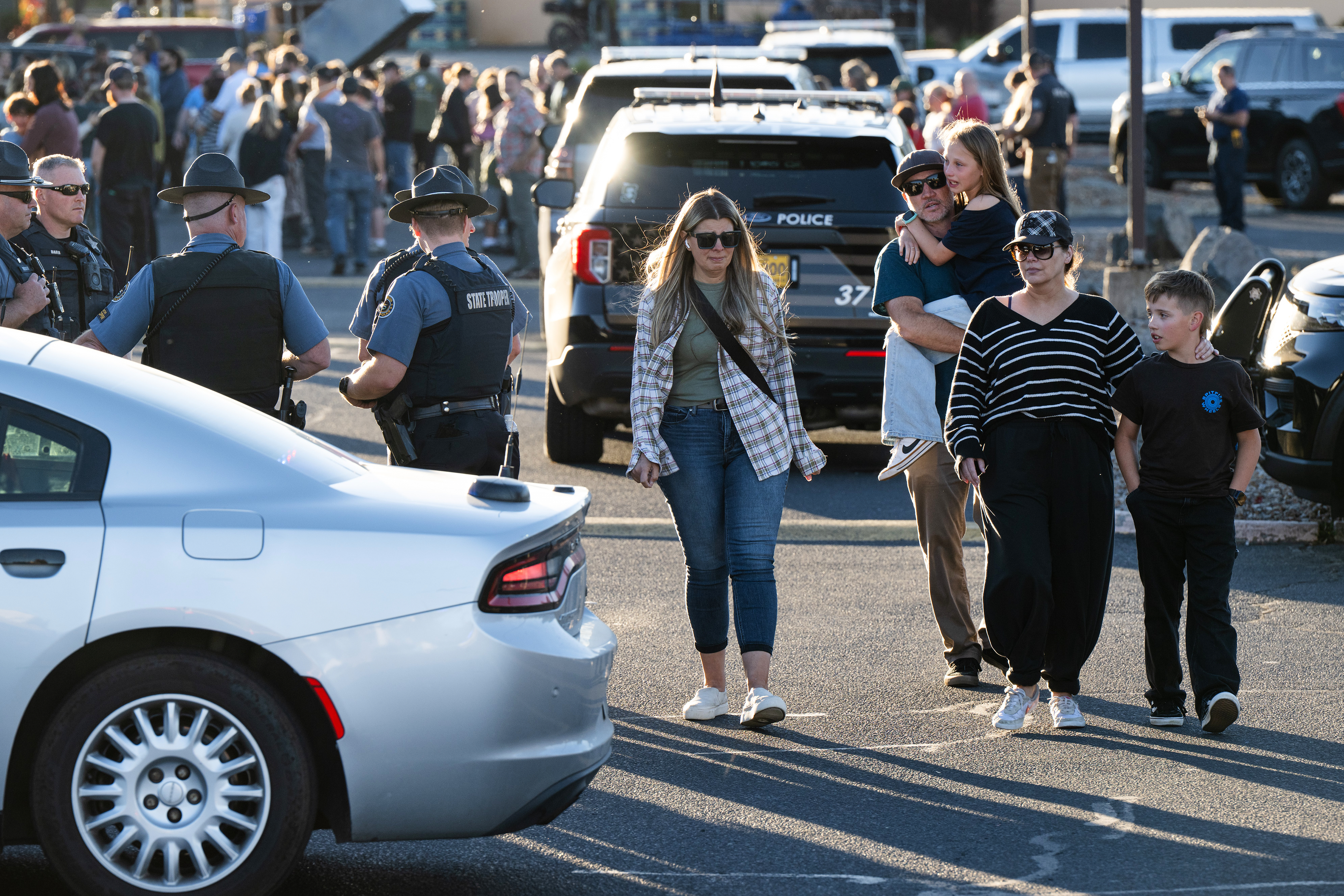
Witnesses described hearing gunshots and seeing police swarm the school.
"I heard what I thought was gunshots," Erin Johnson, who was visiting her parents next door to the school, told Oregon Public Broadcasting. "Then my neighbor began to scream shortly thereafter — her kids go to school there, at Silver Rail. Then I heard the police coming in.
"It's heartbreaking. I don't know any details right now about who was injured. But they're babies."
Krista Johnson told OregonLive she saw police swarm the school. "So many people stopping what they were doing," she said. "I knew that something had happened."
Thousands attended a vigil at Bend's Drake Park on Thursday night, many carrying candles, flowers and stuffed toys, according to OregonLive. "There is power and love in this park tonight," Kotek said. "On behalf of everyone who lives in Oregon, I am so sorry for what you are experiencing today. No parent, no family, no community should have to have this kind of day."
This article originally appeared on Yahoo News at https://www.yahoo.com/news/us/article/multiple-people-reportedly-killed-after-shooting-at-oregon-elementary-school-230432197.html'You should be ashamed of yourself': Heated Senate debates become personal 16 Oct 2026, 8:17 am

Candidates faced off in heated debates Thursday night in two of the country’s most competitive Senate races, showing how bitter — and personal — each contest has become.
In Maine, Democratic nominee Troy Jackson told GOP Sen. Susan Collins to “shut up” after she suggested a protester was one of his supporters. And in Alaska, Republican Sen. Dan Sullivan questioned Democratic opponent Mary Peltola’s “character” while citing allegations she mistreated staff.
“I think that Alaskans have had it up to here with the lying and dishonesty,” Peltola said during another exchange. “Dan, you should be ashamed of yourself.”
The races are unfolding thousands of miles apart but both critical to the Senate majority. Collins, a moderate Republican, is seeking reelection in a blue state, while Sullivan is running for another term in more GOP-leaning Alaska where Peltola, a former congresswoman, is well-known.
Both debates showed how much of a political liability President Donald Trump’s war in Iran has become for Republican incumbents. Sullivan said it “needs to end soon,” while Collins continued to insist Trump should have consulted Congress on the conflict.
Here’s a look at key moments from the debates.

A protester disrupts Collins on data centers
The fourth and final Senate debate in Maine grew heated as Collins and Jackson sharpened their attacks.
Within minutes, a protester shouted at Collins about the impact of data centers, forcing the debate to a brief halt.
“AI data centers are destroying our climate. They are poisoning our waters,” the protester yelled.
Following the incident, Collins said the protester “is obviously one of Troy’s supporters.”
“Oh, shut up,” Jackson replied, saying he did not know who the person was.
Corruption allegations and campaign financing in Maine
During the Collins-Jackson debate, both candidates tried to portray their opponent as corrupt, a major theme that has loomed over the hotly contested race and the midterms nationally.
Collins cornered Jackson for not sharing his FEC report with her on Wednesday, a promise he made at their debate earlier this week.
Jackson said he missed his self-imposed deadline because it took longer to process the donations from 200,000 people to his campaign than he expected.
“I had to make sure this report was right. It was my first one,” Jackson said.
Throughout the campaign, Jackson has framed Collins as being influenced by her donors and touted that he doesn’t take any corporate PAC money. Collins tried to flip the script on Thursday by dinging Jackson for running joint ads with his party’s Senate campaign arm, which does take money from corporations, and for not disclosing his donors.
Jackson said he did not control their donations to the Senate campaign committee but did concede his campaign has taken money from billionaires.
“That is accurate. But I haven’t made any deals like Senator Collins has with those billionaires. I don’t owe them any votes. I am going to tax those billionaires when I get to the US Senate. So, if they want to give me money during this campaign, I guess that’s up to them,” Jackson said.
When it was Jackson’s turn to ask Collins a question, he got personal. In defending his credentials and pushing back on Collins’ critique that he doesn’t have the right experience, Jackson exclaimed, “Is it just me that you look down on or is it working-class people overall?”
Collins further distances from Trump on Iran war
Collins doubled down on her criticism of the Iran war as the Maine Republican continues to distance herself from Trump.
When asked if Congress should have been consulted before Trump decided to go to war, Collins said, “Congress definitely should have been consulted.”
But Collins added that that the War Powers Resolution gave Trump the flexibility to act unilaterally within the first 60 days of the conflict, which she said is why she did not start voting to rein in Trump’s war powers until after those initial 60 days had passed.
unknown content item
-Iran war’s consequences also hangs over Alaska debate
Sullivan repeatedly had to grapple with issues where Trump has not made the race easy for him. The war in Iran, for example, has led to especially high fuel costs in Alaska.
Sullivan said he has opposed limiting Trump’s Iran powers because he supports the overall goal of preventing the country from obtaining a nuclear weapon. But he said the war “needs to end soon.”
“The energy costs from this war are too high, but … the best way to bring down costs with regard to energy in Alaska is to produce more energy by and for Alaskans,” Sullivan said, suggesting Peltola could not be trusted to support that.
Peltola blamed Washington politicians for “waging forever wars that are skyrocketing our costs.” And she scoffed at Sullivan’s pivot to the topic of domestic energy production.
“I have been a strong supporter of drilling in Alaska,” she said. “That is not the issue here.”
Sullivan continued to show daylight with Trump when asked about Trump’s plan to buy Russian diesel. He reiterated his opposition, saying, “I don’t think it’s a good ideal at all,” and noting he “just led the effort” to pass new sanctions on Russia in Congress.
Sullivan, Peltola spar over her treatment of staff
Sullivan and Peltola clashed twice over a September story from The New York Times that alleged staff mistreatment by Peltola. In the article, her campaign pushed back on the suggestion she regularly abused her staff but said she occasionally “struggled to deal with her grief” after her mother and husband died in 2023.
“I do not think that this election is about me on my worst day, and I found so many of these allegations concerning and outright fabrications or mass exaggerations of the truth,” Peltola said at the debate when asked about the Times report.
Sullivan emphasized that the story was based on interviews with nine former staff members and at least 20 other people.
“It’s not Mary Peltola on her worst day,” Sullivan said. “It’s Mary Peltola over the course of a couple years with dozens of people weighing in on this.”
Sullivan brought up the Times story on his own earlier in the debate, saying Peltola has “treated young Alaskans horribly” and that it was “a character flaw.” Peltola called it “gossip” and “unfounded allegations” as Sullivan talked over her.
“It’s the New York Times,” he said. “Read the article.”
Sullivan questions whether Peltola got questions in advance
The Times story was not the only cause for animosity between the two candidates.
After Peltola criticized Sullivan about the war in Iran, looking down at notes on her podium as she spoke, Sullivan turned to the moderators.
“We weren’t supposed to get these questions beforehand were, we?” he asked.
“No, sir,” one moderator said before another added: “Neither one of you got questions beforehand. Absolutely not.”
“OK,” Sullivan said. “I’m just watching my opponent read from questions that seem to be answered.”
“I’m prepared,” Peltola said.
Sullivan appeared to back down from his suggestion while speaking with reporters after the debate, according to Alaska Public Media, which quoted him telling the hosts, “I’m not blaming you guys.”
This story has been updated with additional information.
For more CNN news and newsletters create an account at CNN.com
This article originally appeared on CNN at https://www.cnn.com/2026/10/16/politics/senate-debates-takeaways-maine-alaska
Elon Musk settles fraud lawsuits over his $1 million giveaways to 2024 voters 16 Oct 2026, 7:00 am

Tech billionaire and Republican megadonor Elon Musk on Thursday settled the two remaining lawsuits stemming from his $1 million giveaways to voters during the 2024 election, according to court filings, bringing a two-year legal saga to an end.
During the final stretch of the 2024 presidential race, Musk’s super PAC started a daily $1 million giveaway to registered voters in battleground states, while Musk was urging voters to support Donald Trump.
After the election, voters in a handful of battleground states filed proposed class-action civil fraud lawsuits against Musk and his political group, America PAC, which both deny wrongdoing. The voters claimed Musk duped them into believing that they’d have a fair shot at the money if they signed up for the sweepstakes — which included turning over their private data to his political organization.
Musk had publicly stated that the payouts would be given away “randomly” to registered voters. But his lawyers later conceded in court that winners were “not chosen by chance” but rather were picked based on whether they would be a strong spokesperson for the pro-Trump super PAC.
In court filings from the two separate cases on Thursday, lawyers for Musk and for the voters said they had settled the litigation. The filings did not describe the terms of the settlements.
CNN has requested comment from Musk spokesman and the lawyers representing the voters who sued him for comment.
This year, Musk has reprised his role as a Republican megadonor — with at least $276 million in donations to GOP candidates for the midterm elections. He has also continued to be one of the leading promoters of election-related disinformation, as he was in 2024.
The Justice Department warned Musk back in 2024 that the million-dollar giveaways could violate longstanding federal laws against vote-buying.
The Philadelphia District Attorney filed a lawsuit to shut down the sweepstakes while it was still happening, but a state judge ruled on the eve of Election Day that it could proceed.
The bipartisan Wisconsin Election Commission concluded earlier this year that Musk likely broke state law with similar cash giveaways in a 2025 state judicial race. But prosecutors declined to bring charges because, they said, the evidence was too weak to secure a bribery conviction.
This story has been updated with additional information.
For more CNN news and newsletters create an account at CNN.com
This article originally appeared on CNN at https://www.cnn.com/2026/10/15/politics/elon-musk-settles-lawsuits-one-million-dollars-giveaways
The U.S. economy is facing 2 hot wars heating up at a bad time for the White House 16 Oct 2026, 6:01 am
Yields are above multidecade highs, both gas and diesel prices continue to climb, and critical midterm elections are around the corner.
Adding to pressure on the US economy and the current administration, the world's two largest hot wars are heating up.
'Iran knows when the midterms are too'
In the Middle East, dual fronts along the Strait of Hormuz and the Red Sea have seen a resurgence of conflict in recent weeks that has heavily disrupted oil flows in the region.
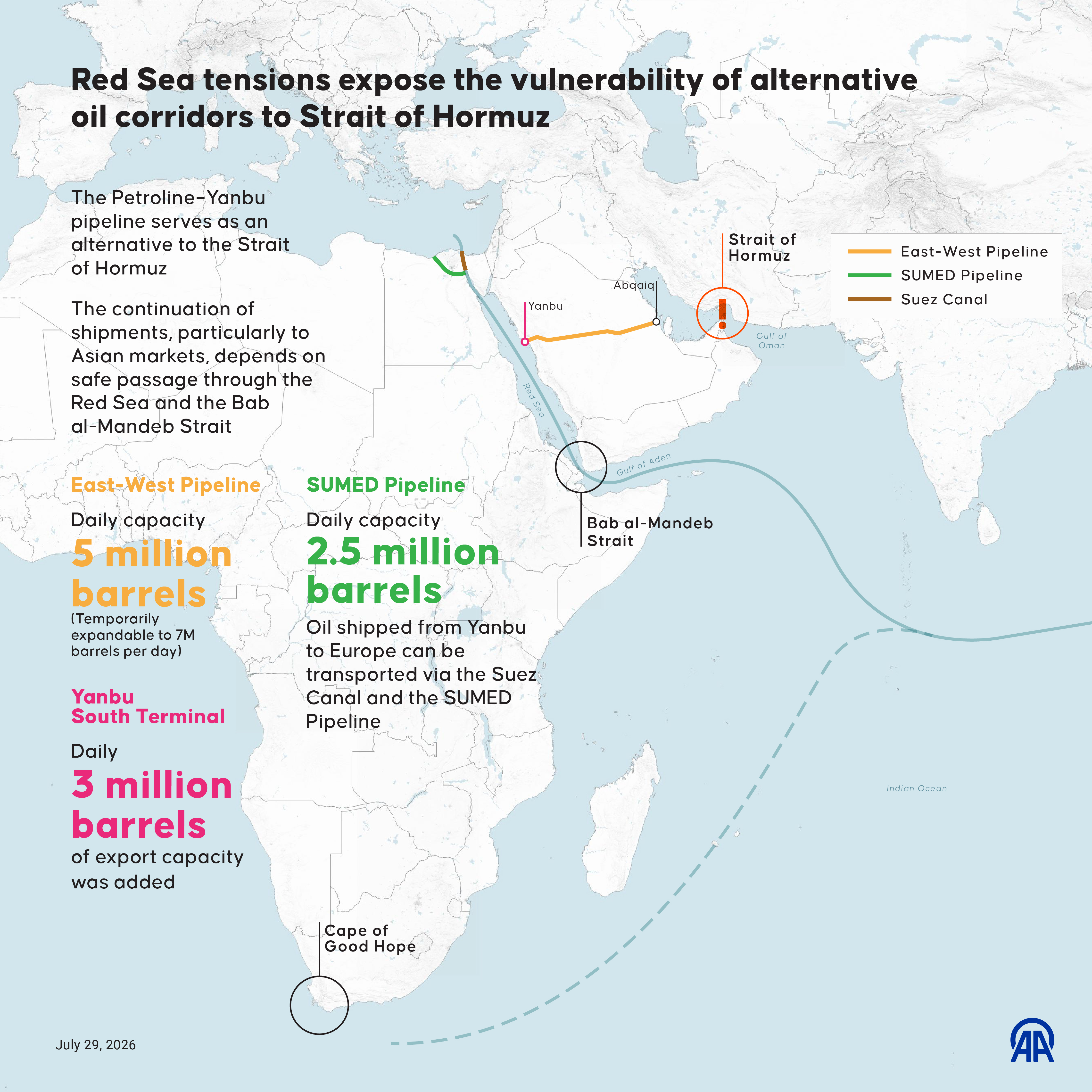
Multiple tankers and container ships in the Strait of Hormuz either caught fire or sank this week in the Iran-dominated waterway. The Washington Institute has tracked more than two dozen attacks recorded since the start of the month.
President Trump has said the US military won't resume airstrikes inside Iran before the midterm elections as White House negotiators continue angling for a diplomatic solution to the conflict now in its eighth month.
Read more: How to protect your money as Mideast turmoil fuels market volatility

At the same time, administration officials are reportedly war-gaming a major offensive to come after the November elections, when the president will be less encumbered by the political needs of the Republican Party.
"The Trump Administration does not want Brent crude oil at $106/bbl going into the midterm elections, just a month away, and has said that he only plans to escalate offenses against Iran after the midterms are over, with what he hopes to be, a red wave," Rabobank cross-asset macro strategist Molly Schwartz said in a recent note to clients.
Houthi militants recently struck an office building belonging to the state-managed oil giant Saudi Aramco (2223.SR). While the kingdom's oil production remains largely undisrupted, violent pestering by the Iran-allied Houthis is driving up oil prices.
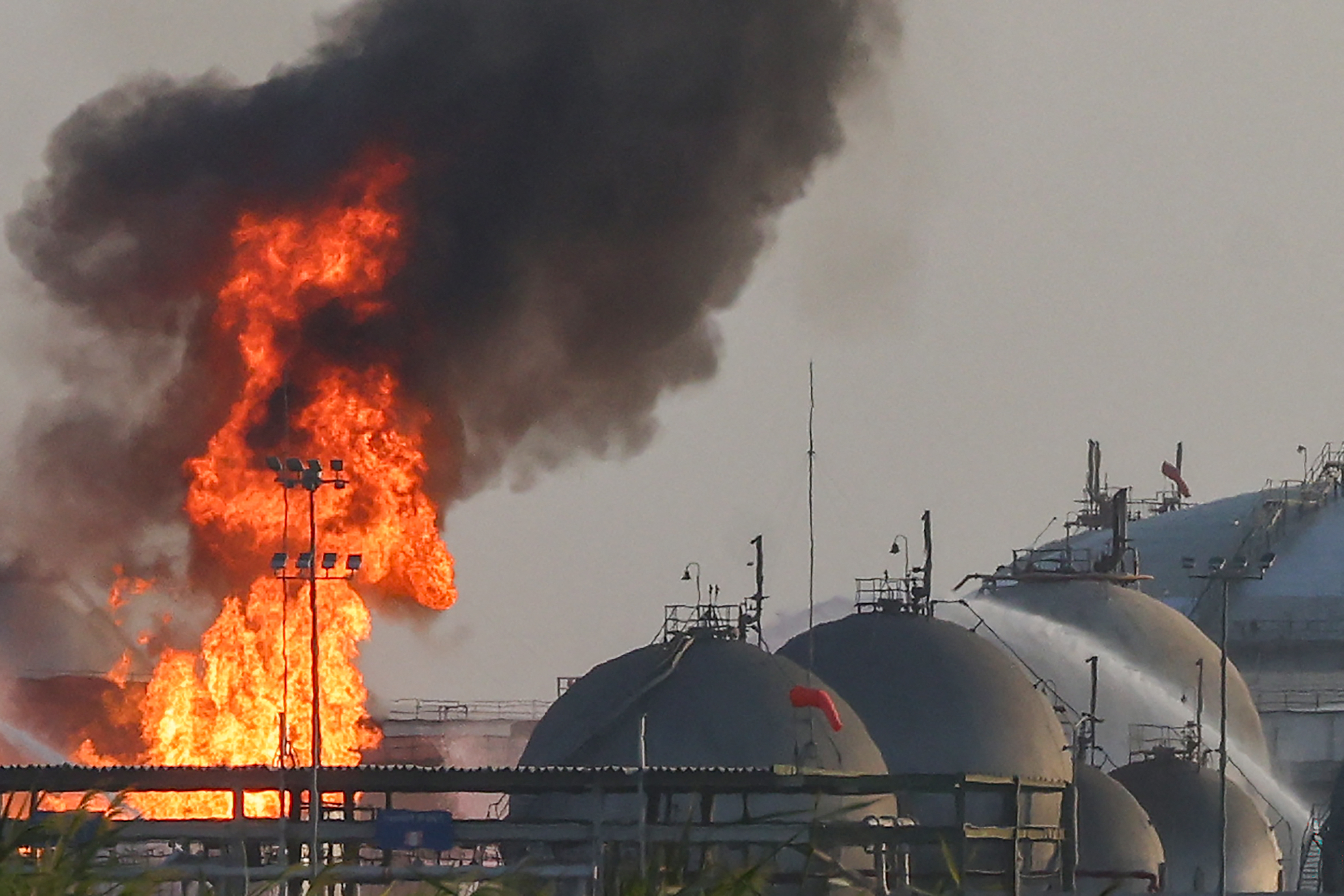
"Iran knows when the midterms are too," Schwartz added, "and if they want to further complicate Trump's plans, now is the perfect time to have the Houthis stir up trouble and make it increasingly difficult for the US to avoid intervening."
Ukraine, Russia, and Starlink throttling
Ukraine and Russia, which have been at war since Russia executed a stealth annexation of Crimea in 2014 and invaded its neighbor in February 2022, recently both escalated offensive strikes against critical infrastructure ahead of another winter.
Kyiv leverages long-range drone attacks to knock out oil refineries inside Russia, claiming to have disrupted half the country's refining capacity, while Moscow has repeatedly targeted power plants and other civilian infrastructure inside Ukraine.
Over the weekend, President Trump called for an "energy ceasefire," part of a bid to bring down US diesel prices that has included a deal that will see the US buy Russian fuel, breaking with several years of sanctions meant to pressure the Kremlin's war chest.

Shortly after the announcement, Russia launched a round of strikes against power plants in Ukraine, prompting Ukrainian President Volodymyr Zelensky to say Kyiv would continue to target Russian refineries.
On Wednesday, Ukraine reported rate-throttling of Starlink, satellite communications services developed by SpaceX (SPCX), and its military subscription service StarShield.
On Thursday evening, citing an official familiar with the matter, Reuters reported that "the order to limit a satellite system used by Ukraine for battlefield communications and drone operations came from inside the White House."
Ukrainian troops use both Starlink and Starshield terminals.

Oil prices and yields pressure US economy
Taken together, the conflicts are putting immense pressure on the global energy system — and, increasingly, on the US economy.
While oil exports from the Persian Gulf have returned to prewar levels via alternative routes, exports through the waterway itself — which before the war accounted for roughly one-fifth of global oil flows — have remained far below prewar levels.
And prior to 2022, Russia provided roughly 10% of the world's diesel exports. But Moscow has largely been cut off from the market after international sanctions and domestic export bans.
The US economy is feeling the disruption: Yields on US 10-year and 30-year Treasurys have climbed to levels not seen since the early 2000s, pressuring consumer and corporate borrowers. Gasoline and diesel prices have soared to record levels.
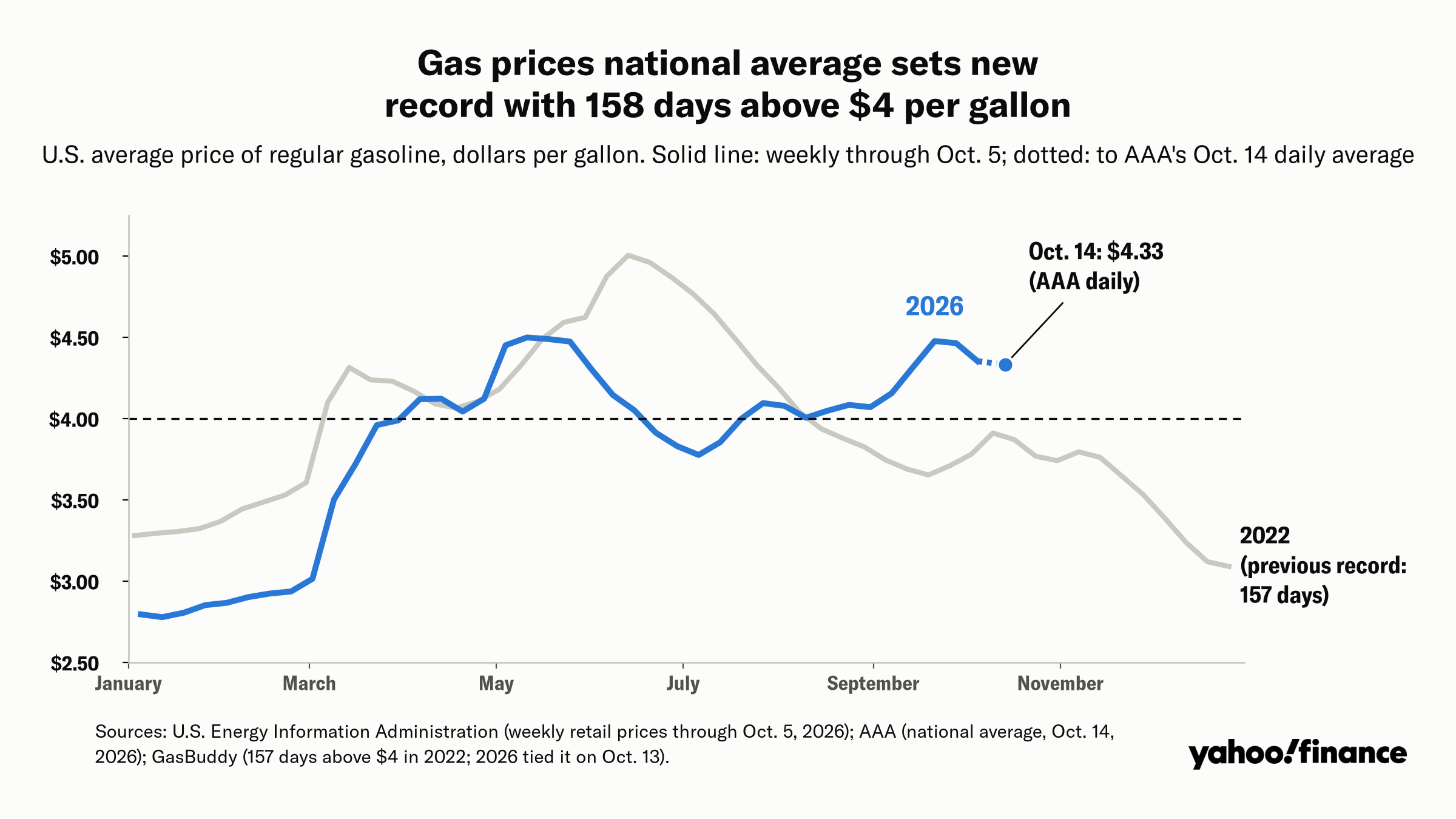
Recent reports from the Bureau of Labor Statistics showed inflation readings on both consumer and producer prices accelerating faster than expected, with energy prices rising at the quickest pace since March, just after the start of the Iran war.
For the White House, those economic pressures have complicated the outlook for midterm elections less than three weeks away.
In comments to reporters on Wednesday night, President Trump said again that the war in Iran will "end very soon," and the White House is reportedly considering the use of a GBU-43/B Massive Ordnance Air Blast Bomb (MOAB) — the largest non-nuclear bomb in the US arsenal, which would mark a major step-up in escalation.
Iran is not backing down: Parliamentary speaker Mohamed Bagher Ghalibaf said on Wednesday that Iran will fight until its demands are met in negotiations.
In Ukraine, President Zelensky has ordered renewed attacks on Russian refineries.
And with only a few short weeks left until the midterms, the reheating of both wars has left the White House — and, by proxy, the US economy — between a rock and a hard place.
Jake Conley is a breaking news reporter covering US equities for Yahoo Finance. Follow him on X at @byjakeconley or email him at jake.conley@yahooinc.com.
Read the latest financial and business news from Yahoo Finance
This article originally appeared on Yahoo Finance at https://finance.yahoo.com/energy/article/the-us-economy-is-facing-2-hot-wars-heating-up-at-a-bad-time-for-the-white-house-133309757.htmlBody found in barrel at Lake Mead identified as 1980s shooting victim 16 Oct 2026, 5:31 am
The remains of a man who was shot in the head and stuffed into a rusted barrel found on the shore of Lake Mead after the water level dropped were identified Thursday as an Arkansas man whose decades-old killing remains unsolved.
Edward Lelburian Jackson was in his mid- to late 50s when he died, Clark County Coroner Melanie Rouse said. Authorities are looking for people to come forward to help solve Jackson's killing.
There was no evidence directly linking the killing to organized crime in nearby Las Vegas despite longstanding speculation, although a connection hasn't been ruled out, police said. An expert on mob activity in the city said the case bears the "earmarks" of a mob hit and that questions still linger.
The discovery sparked memories of Las Vegas' mob era
Jackson was identified with the help of a bone sample sent for genealogy profiling, along with three angles of a composite face and clothing Jackson was wearing when he died, Rouse said.
"We were able to confirm that the remains were in fact Edward Jackson," she said.

The discovery of the barrel by boaters in May 2022 sparked memories of the city's mob era, which lasted from the 1940s to the mid-1980s. Organized crime helped build up Las Vegas, and a body stuffed in a barrel was known to signify a mob killing.
Jackson, believed to be from Hot Springs, Arkansas, had a brief criminal history in the early 1980s in Salt Lake City, Utah, which included one charge of aggravated arson and conspiracy to commit fraud, said Robert Price, a Las Vegas Metropolitan Police Department homicide lieutenant.
Police said Jackson was married for a short time with no known children, CBS affiliate KLAS-TV reported.
It's unclear why Jackson was in Las Vegas
Price said there is nothing to tie the killing to organized crime. He added, however, that it hasn't been ruled out.
Jackson's family told investigators that he liked to travel and detectives found records of him in California, where he lived with his wife in the early '70s. His family said they last saw him in Arkansas in the early '80s, and it is unclear why he was in Las Vegas. Homicide detectives will continue working to figure out what happened to him, said Price.

"It's an unsolved case. It will never be closed until we solve it," Price said Thursday. "I would say that this is a piece of the puzzle and as we get more and more pieces, we'll be able to keep on digging deeper."
Authorities had already said the man was shot, and they estimate he was killed in the early 1980s.
Jackson had not been reported missing
The man had been wearing a button-down short-sleeve shirt, light blue jeans, a silver wristwatch and blue-and-white tennis shoes.
Price said the family didn't report him missing.
"They knew that he had traveled the country, would show up when he showed up, just to say hi. But they didn't think anything other than that. They just figured he was out and about," he said.
Researcher says case has all the "earmarks of a mob hit"
Geoff Schumacher, vice president of research, collections and programs at The Mob Museum in Las Vegas, said there are still many questions about who Jackson was and what he was involved in that "earned him a trip in a barrel into the lake."
Members of organized crime were involved in the Las Vegas casino industry from the 1940s to the mid-1980s, both behind the scenes and through shadow ownerships of casinos, Schumacher said.
He said the case had all the "earmarks of a mob hit," mirroring another case from 1976 when Italian mobster John Roselli was killed and stuffed in a barrel and dumped into a bay outside of Miami Beach.

Schumacher said he and Mob Museum staff will comb their records to try to help solve the case.
"I think this story is not over," he said.
Other bodies discovered as Lake Mead recedes
Las Vegas historian Michael Green said whoever committed the crime probably thought the body would "never come near the surface." In the early 1980s, the lake levels were so high that the spillways flooded at Hoover Dam, he said.
Now, Lake Mead is at a historic low due to years of overuse, longstanding drought and increasing temperatures. The water level of the 90-year-old reservoir has dropped, exposing areas that were previously underwater. In August, the water level dipped to 1,039.77 feet above sea level, according to the U.S. Bureau of Reclamation, well below the previous record low set in July 2022.
Several other sets of remains were found at Lake Mead in 2022. Another set of skeletal remains was discovered that May, and they were identified as a drowning victim from 2002. Skeletal remains found in August were identified as a 52-year-old Las Vegas resident who disappeared in 1998. The remains of another drowning victim, Donald Smith, who was believed to have drowned in 1974, were found in October 2022.
Its receding waters are leaving behind the usual flotsam and jetsam of a lake heavily trafficked by weekend boaters — and even exposing a ship dating back to World War II.
Lake Mead and the upstream Lake Powell are the largest human-made reservoirs in the U.S., part of a system that provides Colorado River water to people across the U.S. Southwest and Mexico.
In 2022, Lake Mead's dropping level exposed Las Vegas' uppermost drinking water intake. That forced authorities to switch to a deeper intake to keep serving the city's 2.4 million residents.
This article originally appeared on CBS News at https://www.cbsnews.com/news/body-barrel-lake-mead-identified-homicide-victim-edward-jackson/

Major hurricane Trudy keeps strengthening as it nears Mexico's Pacific coast 16 Oct 2026, 5:30 am
Oct 16 (Reuters) - Hurricane Trudy rapidly intensified into a major hurricane on Friday morning, carrying maximum sustained winds near 120 mph (195 kph) and higher gusts, as it moves closer to Mexico's Pacific coast.
Additional strengthening is still forecast before Trudy is expected to approach the Mexican coast on Saturday as a life-threatening major hurricane, the US-based National Hurricane Center said.
"Trudy has the potential to even reach Category 4 or 5 intensity," said Alex DaSilva, a hurricane meteorologist at private forecaster AccuWeather.
Mexico's civil protection agency asked residents to start preparations for the storm's arrival by securing doors and windows, and removing objects that could be thrown around by the strong winds.
The hurricane will strike Mexico's Pacific coast, a region that has already been battered in recent weeks by storms that left several dead and caused severe flooding.
Located about 250 miles (400 km) south-southwest of resort city Acapulco, the storm is expected to produce up to 12 inches (30 cm) of rain in the states of Michoacan, Colima and Jalisco, increasing the risk of life-threatening flooding and landslides, according to the NHC.
Meanwhile, Tropical Storm Simon continues to weaken farther northwest offshore, after dropping heavy rain along the coast earlier as a hurricane.
(Reporting by Aida Pelaez-Fernandez; Editing by Toby Chopra)
This article originally appeared on Reuters at https://www.yahoo.com/news/weather-news/articles/major-hurricane-trudy-keeps-strengthening-103029621.html
Trump calls Ukraine's renewed strikes on Russian oil refineries 'a disgrace' 16 Oct 2026, 5:01 am

Donald Trump has called Ukraine’s renewed strikes on Russian oil refineries “a disgrace” and criticised Volodymyr Zelenskyy after an energy ceasefire between Russia and Ukraine failed to take hold.
Ukraine resumed strikes on Russian oil refineries after Zelenskyy said Kyiv was abandoning a ceasefire unilaterally declared by Trump on Sunday, having briefly halted its attacks to demonstrate its readiness for peace talks. Russia had continued its strikes on Ukrainian power plants.
Related: Russia and Ukraine trade strikes as Trump ‘energy ceasefire’ collapses
In an interview with Newsmax aired on Thursday, the US president said: “All he’s doing is making the world oil price higher. Well, I think that’s a disgrace.
“There are a lot of targets you can hit, but when you shoot at diesel refineries where you make, you know, diesel oil, and we need that, and the world needs that, then he’s not doing a good service for the world.”
Relations between Kyiv and Washington have soured since Trump announced an easing sanctions on Russia in exchange for Moscow releasing large amounts of diesel on to global markets.
Zelenskyy criticised the agreement, which was widely interpreted as an attempt to curb high fuel prices before the US midterm elections, saying it would allow Russia to press on with its full-scale invasion of Ukraine that began more than four and a half years ago. US efforts under Trump to end the war have made no progress.
Trump repeated to Newsmax his views of the two leaders involved in the conflict. “I’m not a big fan of Zelenskyy,” Trump said. “I think they actually both would like to see it end, but I think I find Zelenskyy to be more difficult to deal with than Putin.”
Arriving in Brussels to meet EU leaders on Friday, Zelenskyy did not comment on Trump’s latest remarks. He said he was “so thankful that we have such huge support from the EU” and its leaders, whom he described as “real leaders”.
He went on to say that Ukraine wanted to end the war as quickly as possible, but “we don’t see now signals from [the] Russian side that they are ready for this”.
Kyiv’s relationship with Washington was strained further this week when Ukraine said Starlink services had been restricted, in effect hobbling Ukrainian drone strike missions and crucial air defences with a flick of the switch.
During a visit to London this week, the Ukrainian president said the sudden restriction of Starlink had left him feeling personally betrayed by Trump and lamented losing a partner.
Related: Russia and Ukraine trade strikes as Trump ‘energy ceasefire’ collapses
The British defence secretary, Wes Streeting, said on Thursday that his US counterpart, Pete Hegseth, had assured him in a face-to-face meeting that the vital satellite communications system had been restored. In an interview with the BBC, he said it was unclear what had caused the disruption, but added: “This is not the first time we’ve seen a falling out between Washington and Kyiv.”
Amid growing doubts about long-term US commitment to Ukraine, European leaders declared their support for Zelenskyy.
Standing alongside the Ukrainian leader in Brussels, the European Council president, António Costa, said Ukraine could “count on us not only to support you in war” but also in the path to negotiating EU membership.
The European Commission president, Ursula von der Leyen, said the EU had supported Trump’s energy ceasefire, “but we have seen that Russia did not respect it, not a single minute” and instead had escalated its attacks. She said the EU intended to increase pressure on Russia, promising a 22nd round of sanctions, adding: “We will not lift any sanctions unless Russia stops the war.”
The promise of further European sanctions against Russia comes weeks after the EU lifted sanctions against two prominent Russian oligarchs at the request of France and Luxembourg.
After meeting Zelenskyy, the French president, Emmanuel Macron, said it was “crucial” that Ukraine received “all the means necessary to protect itself”.
The Polish prime minister, Donald Tusk, posted online: “I can reassure you, dear Ukrainian friends and President Zelenskyy: YOU ARE NOT ALONE.”
As Zelenskyy met Macron in Brussels, he said that the Kremlin had “launched yet another vile drone strike on Ukrainian energy infrastructure” in the city of Lutsk, which caused blackouts.
The Kremlin, meanwhile, accused Ukraine of derailing US peace efforts by resuming its strikes on refineries.
This article originally appeared on The Guardian at https://uk.news.yahoo.com/trump-calls-ukraine-renewed-strikes-090456352.html
Power struggle erupts in Trump's White House as specter of midterm losses loom 16 Oct 2026, 4:00 am
White House aides, who have kept clashes muted during President Donald Trump's second term, have begun jostling more openly for power as they brace for widespread midterm election losses and internal upheaval, according to interviews with 20 staffers, advisers and people close to the president.
The interviews, most of which were conducted on the condition of anonymity to discuss sensitive personnel machinations, paint a picture of infighting that has started to resemble the pitched battles of Trump's first term.
Believing that Chief of Staff Susie Wiles might step down after the election, a handful of Trump aides, including Deputy Chief of Staff Stephen Miller, top housing official Bill Pulte and EPA Administrator Lee Zeldin, have begun angling for the position should it become available.
Wiles has given no indication to aides or allies that she plans to leave. Still, high-level White House staffers frequently cycle out of their stressful jobs after 18 months to two years, and Trump had four chiefs of staff, including an acting one, during his first term.
The past week in the White House has been "the new Wild Wild West," one Trump ally said.
The jockeying started in earnest last week after Trump first reached out to Katie Zacharia about joining the administration as the new White House press secretary, a move he made without consulting Wiles, according to four people familiar with the decision. The unilateral action by the president was viewed internally as undermining Wiles, creating the impression of a less-disciplined operation and an unsettled center of power inside the West Wing.
For longtime observers of Trump's inner circle, the friction this week harks back to his first term, when shifting factions of aides and family members vied for power and undermined one another in the process - a pattern this White House has mostly avoided, until now.
Compounding the uncertainty is the president, who has told allies he feels frustrated that no one is publicly defending him as vociferously as he would like 18 days before the midterm elections. Trump has embarked on a frenzied schedule of campaign rallies in the final stretch to juice enthusiasm among the Republican faithful, but with a historically low approval rating and growing voter frustration about high prices, he and the Republican Party face major political headwinds.
The president has been calling friends, White House aides and outside advisers because he appears worried that information is not reaching him, according to an adviser who received one of the calls. In these conversations, he has also vented about the midterms and the two outside advisers quarterbacking his political strategy, James Blair and Chris LaCivita, who are close allies of Wiles.
Among those who have been in contact with Trump is former aide Corey Lewandowski, a fierce rival of Wiles's, who is supportive of Pulte, according to two people with knowledge of the conversations.
Reached for comment, Lewandowski said: "I have never spoken with the president about Bill Pulte being the chief of staff."
"These anonymous sources know nothing. It's the same selfish, opportunistic behavior from people more focused on themselves than on President Trump, whose priority is delivering for the American people and winning the midterms," Danielle Alvarez, a White House spokesperson, said in response to a request for comment. "President Trump has assembled a strong, talented and united team focused on his America First agenda - not the egos and political games of anonymous outsiders."
Internal GOP polling shows that support for Republican candidates cratered after the party's midterm convention in Dallas, with voters saying the party was not attuned to their economic concerns, according to a Republican strategist briefed on the numbers. Rather than campaigning extensively in September, Trump spent much of the month hosting Chinese President Xi Jinping at the White House and working on his construction projects, including a new White House helipad and his proposed ballroom.
Although the White House continues to express confidence in public, many Trump aides and allies believe they will lose control of the House of Representatives, although by how large a margin remains unclear. Trump advisers and Republican strategists say the fate of the Senate is a 50-50 proposition, despite a deluge of spending in recent weeks by the president's main super PAC, MAGA Inc., and the Senate Leadership Fund. They acknowledge that typically red states, including Kansas and Texas, are in play.
Whether Wiles will opt to stay in her position if the midterms yield major GOP losses has emerged as a dominant topic in Trumpworld.
A Republican "blowout next month, very likely, will be a wedge that the ambitious use" to slide into the chief of staff's office, one Wiles ally said.
The jockeying to become the next chief of staff has taken various forms. Pulte frequently lugs poster boards onto the golf course, Marine One or Air Force One to try to nudge Trump to sign on to his ideas.
Typically, the poster boards contain Pulte's proposals to handle whatever issue is irking the president that day - be it the renovations to the Kennedy Center or the Federal Reserve's failure to lower interest rates. Sometimes the posters include artwork of the president, or images of his rallies, according to one person who has viewed the posters. Trump's love of visual aids has its limits; he has told advisers that Pulte has brought him so many poster boards that they are cluttering up the White House residence, said two White House officials and a third person close to the White House.
Wiles ran Trump's highly disciplined 2024 presidential campaign and paved the way for him and his team to take swift action through more than 100 executive orders during his first 100 days in office. While she does not consider herself a policy expert, she has inserted herself into the center of the administration's debates on global tariffs and potential guardrails for artificial intelligence, as both became political liabilities for the president.
But Wiles and her inner circle were put on the defensive recently after Blair and LaCivita traveled to Republika Srpska - the Serbian-dominated portion of Bosnia - to do political consulting work for the pro-Russian government.
That created problems for Wiles, who had brought both men into Trump's 2024 campaign. The president has always bristled when current or former aides profit off their connections to him.
Trump responded by posting a pointed message on Truth Social distancing himself from Blair and LaCivita and promising to fire them if their consulting work posed a conflict of interest.
The story got worse for the chief of staff when a photo surfaced of her daughter, Katie Wiles, on a visit to Republika Srpska. The younger Wiles is a partner at the lobbying firm Continental Strategy, which represents the territory's government (though she is not individually named on the firm's lobbying disclosure forms). Detractors of Wiles, LaCivita and Blair have been fueling the tensions and stoking Trump's suspicions by showing him critical articles about the foreign consulting, three outside advisers said.
Blair and LaCivita are still leading Trump's midterm strategy, and the president still talks to Blair frequently, but his initial unhappiness with their trip may have weakened the duo's ability to offer guidance and issue directives to various campaigns, one Republican strategist said.
Related Content
This article originally appeared on Washington Post at https://www.yahoo.com/news/politics/articles/power-struggle-erupts-trump-white-090000328.htmlChina tells Trump's press secretary to visit 'more often' after toilet comments 16 Oct 2026, 3:43 am

Beijing told the White House Press Secretary Katie Zacharia on Friday to visit China "more often", after she said the country lacked "proper toilets" less than a week into her new post.
After years of intense rivalry between the United States and China over globally challenging issues from trade and technology to Taiwan and human rights, the US president's new spokesperson took the two sides' relationship to uncharted territory.
Zacharia -- who previously lived in China and is due to visit next month -- recalled in an interview the perception in 2016 that China would soon overtake the United States.
"I remember this very distinctly, having just come from China, thinking, 'How is China the next country on the horizon? They don't even have proper toilets," she told right-wing influencer Jack Posobiec.
In response, China's foreign ministry on Friday suggested she may want to make another trip to the country.
"We welcome her to visit China more often when she has the opportunity," spokeswoman Mao Ning told reporters, fighting back a smile.
Trump has often spoken about his "great relationship" with China's President Xi Jinping, who he has met twice this year, though ties remain strained.
Zacharia's remarks come just days after what many considered a somewhat questionable debut in front of the White House press corp in which she appeared to be unable to answer basic questions and at one point referred to her husband as the president.
The 41-year-old is already under scrutiny over her legal credentials, after giving an inconclusive answer about where she had passed the bar exam, a prerequisite for practising law in the United States.
The self-described lawyer lists herself as general counsel of a California-based conservative nonprofit. She also says she previously worked at a law firm in Beijing.
Asked about her legal background on Thursday, she said she had registered to take the bar exam but was then "distracted and overwhelmed" by plans to move with her husband to China.
Zacharia said she did not retake the bar exam upon returning to the United States due to the birth of her first child.
stu-isk-dhw/dan/hmn
This article originally appeared on AFP at https://www.yahoo.com/news/politics/articles/trumps-press-secretary-says-china-054609295.html
Lawsuit alleges DHS collected voter data from 47 states and violated privacy laws 16 Oct 2026, 1:47 am
The Trump administration is being sued over its efforts to collect and analyze sensitive voter data from across the country.
The complaint, filed in federal court in Washington, D.C., on Thursday, alleges the Department of Homeland Security has obtained voter files from at least 47 states and handled the data in a way that violates federal law.
DHS' secretive probe of the voter data, which includes a policy to combine it with commercial datasets, ignores federal safeguards and the privacy rights of millions of Americans, the lawsuit says.
The case was brought by the League of Women Voters, the Electronic Privacy Information Center and the League of United Latin American Citizens and is the latest legal challenge to President Donald Trump's efforts to combat noncitizen voting.
State Department Considers Sharing Passport Records For Voter Citizenship Checks

The president has purported repeatedly argued that noncitizen voting poses a serious threat to election integrity, although studies and prosecutions have found documented instances of noncitizens casting ballots to be rare.
The administration has repeatedly sought a greater federal role in voter eligibility and election administration, areas traditionally overseen primarily by states under the Constitution and federal law.
Federal courts have repeatedly rejected administration efforts to compel states to turn over voter information.
The new lawsuit alleges the administration has obtained and processed voter records from at least 47 states, even though officials in 30 states have previously refused federal demands to turn over voter information.
The complaint urges the court to declare the administration's collection of voter data illegal, block DHS' policy and order the agency to delete and stop using the voter information it has already obtained.
The lawsuit comes less than three weeks before Election Day, and the administration continues to pressure states, alleging they are not doing enough to purge noncitizens from their voter rolls.
Trump Scores Supreme Court Win In Election Integrity Fight As States Gain New Voter Roll Tool

Click Here To Download The Fox News App
The administration sued California election officials on Thursday, arguing they failed to act quickly enough to review names the federal government identified as "likely" noncitizens. The Justice Department asked a judge to block the state from counting mail-in ballots from those individuals unless their eligibility can be confirmed.
The California secretary of state's office said it was given only 48 hours to review roughly 20,000 names and said the federal government had not provided the underlying evidence or methodology supporting its claims.
The Justice Department's lawsuit, however, says U.S. Citizenship and Immigration Services conducted a "multiagency and multilevel review" and determined with "high confidence" that roughly 20,000 people on California's voter rolls were likely noncitizens.
DHS did not immediately respond to Fox News Digital's request for comment.
The Associated Press contributed to this report.
Original article source: Trump admin sued over alleged illegal collection of sensitive voter data from 47 states
This article originally appeared on Fox News at https://www.foxnews.com/politics/trump-admin-sued-alleged-illegal-collection-sensitive-voter-data-47-states
Sam Darnold takes responsibility for Seahawks' loss at Denver: 'It's BS' 16 Oct 2026, 12:32 am
DENVER — Seattle Seahawks quarterback Sam Darnold didn't wait for a question when he met the media after Thursday night's loss. It's not like he didn't know what was coming.
"No way to sugarcoat it, that one sucked," said Darnold, who threw two late interceptions in a 17-14 defeat to the Denver Broncos, including a crucial one in overtime. "Can't turn the ball over, obviously that's at the forefront of my mind."
He was just as blunt with his teammates afterward. He took responsibility for the interceptions. He was asked afterward why he felt the need to address the team.
"I just think it's BS for me to keep turning the ball over," Darnold said. "It's not fair to our defense, it's not fair to our special teams group, not fair really to the entire team. I've got to be better that way."
Last season, Darnold redefined his career by helping Seattle win a Super Bowl. But he didn't kick his turnover habit, at least in the regular season. He had 14 interceptions and a league-high 11 fumbles, losing six. Magically, he didn't turn the ball over last postseason. But this season he has seven interceptions despite playing only four full games. It was costly Thursday night.
The Seahawks held the Broncos to 38 offensive yards in the second half and overtime. Their special teams made plays, including a long punt return late in regulation that set up a game-tying field goal. Darnold's turnovers weren't the only reason Seattle lost, and the other Seahawks pointed that out repeatedly. But the Seahawks are 3-3, with three losses in close games, and a big reason is Darnold is making too many big mistakes.
"We have to take care of the ball," Seahawks head coach Mike Macdonald said. "Sam knows that, he told the team that. Gotta take care of the ball."

Sam Darnold 'got greedy' on interception in OT
Darnold's first interception seemed like it would end the game. He was pressured and hurried a pass that was picked off by Broncos cornerback Kris Abrams-Draine at Denver's 31-yard line with Seattle trailing 14-11 and 1:31 left in regulation.
But the Seahawks' defense came through, forcing a quick three-and-out. Seattle drove in the final minute and tied it to send the game to overtime. The Seahawks got the ball first and Darnold tried to force a pass into Cover 2, but it was played well by cornerback Ja'Quan McMillian and picked off at Seattle's 43-yard line. The Broncos gained 8 yards, kicked a field goal and escaped with the win. He said he should have hit Cooper Kupp underneath for what he thought would have been a first down.
"Just got greedy," Darnold said.
While Darnold took responsibility for the turnovers, others pointed out several issues within the offense. Macdonald said multiple times that "our quarterback got hit too much today." Denver registered 17 quarterback hits and had five sacks. The lack of a run game has been an issue most of the season for a Seahawks team that let Kenneth Walker III leave in free agency, though Seattle had a reasonable 113 rushing yards Thursday night. There's an over-reliance on star wide receiver Jaxon Smith-Njigba in the passing game.
It all puts a lot of pressure on Darnold, and that's not good for a quarterback who has had turnover issues his entire career.
"A lot is going to be put on Sam for the result at the end of the day, but we're all out there with him and we all have a responsibility," Kupp said. "We all play a role in protecting the football. He's going to own that, because that's who he is, but we're not going a good enough job offensively to allow him to play in rhythm, we're not doing a good enough job allowing him to get into a flow, turning small plays into big plays, not doing a good enough job in the run game, not doing a good enough job protecting him. There's a lot of things that need to improve."
Seahawks already match last season's loss total
This season's Seahawks will be constantly compared to last season's title team. It happens to every reigning champion, especially if they struggle. Last season was a tremendous year from a dominant champion that lost only three games. They've lost three games already this season.
It's hard to duplicate any season as dominant as the one the 2025 Seahawks had. Losing Walker, and also running back Zach Charbonnet who hasn't played yet after tearing his ACL in the playoffs, has affected the offense. Everything with that unit looks more difficult. On Thursday night, Seattle had just three points until its first touchdown with 5:41 to go in the fourth quarter.
"I'm not going to compare last year and this year. This is the 2026 Seahawks," Darnold said. "There's a lot of things we need to get better at and I'll leave it at that."
The Seahawks are 3-3 and while the frustration is evident, they also talked about how they battled Thursday night to take the game to overtime, and how they've been close in all three losses. The three losses have come by a combined eight points.
"I feel like we're doing well, we're showing what type of team we are at times, but we're not doing enough to close out these games that we should be," Seahawks defensive lineman Leonard Williams said.
Macdonald talked about Seattle's advantage of playing complementary football through all three phases, and part of that is not just the quarterback's play but running the ball and protecting him better. But it also has to include Darnold not turning it over at a startling pace.
"It wasn't a performance that was good enough to win the game. By our team. But the quarterback leads the team," Macdonald said. "I bet Sam would be the first one to tell you that."
This article originally appeared on Yahoo Sports at https://sports.yahoo.com/nfl/article/sam-darnold-takes-responsibility-for-seahawks-loss-at-denver-its-bs-for-me-to-keep-turning-the-ball-over-053242821.htmlTrump wants to help Georgia Republicans win. Democrats welcome his visit. 15 Oct 2026, 11:03 pm
ATLANTA (AP) — Donald Trump's midterm campaign blitz arrives in Georgia on Friday for a rally with top Republican candidates in a state that has long been the epicenter of the president's false claims about election fraud.
In Dalton, the population center of conservative northwest Georgia, Trump will appear with Senate candidate Mike Collins and gubernatorial nominee Rick Jackson as part of the White House effort to boost Republican enthusiasm in an election that could reshape the final years of Trump's second presidency.
“President Trump is the unequivocal leader, best messenger, and unmatched motivator for the Republican Party,” said White House spokesperson Davis Ingle.
Yet unlike some of Trump's recent trips to solidly Republican states — Alabama, Montana, Tennessee — Georgia is a critical battleground. That means Jackson, a billionaire businessman, and Collins, a two-term congressman, need more than Trump stalwarts to defeat their respective Democratic opponents, former Atlanta Mayor Keisha Lance Bottoms and Sen. Jon Ossoff.
“I’m surprised Georgia Republicans want the president here,” Ossoff said. “The president coming to town reminds Georgians that Donald Trump and Mike Collins” have pushed policies that have “driven the cost of groceries, fuel and healthcare to their all-time highs.”
Collins spokesperson Meyer Siegfried said the congressman welcomes the president's attention. But he also stressed that Collins is a “bipartisan workhorse who will work with anybody,” while adding that “Ossoff hates Trump more than he loves our state.”
Bottoms also seemed thrilled with Trump's visit.
“When Donald Trump says he wants people to imagine that he is on the ballot, I am asking the people of Georgia to do just that,” she said, pointing to Jackson's promise to be Trump's “favorite governor.”
The risks have been evident even in the heavily Republican corner of Georgia where the president will visit. Voters there sent erstwhile Trump ally Marjorie Taylor Greene to Congress before she broke with the president and resigned. Trump won the district by about 37 points in 2024 and Greene won by 29. In the April special election to replace Greene, Republican Rep. Clay Fuller won by 12 points.
Republican candidates have run separately
The Dalton event will be the first time this fall that Jackson and Collins have appeared at the same venue. That contrasts with Ossoff and Bottoms holding joint rallies across Georgia, with the next scheduled for Saturday in Cobb County outside Atlanta.
Collins has been dogged by anemic fundraising and controversies that leave even Republicans questioning his viability against Ossoff. Jackson has focused on sharing the stage with other statewide Republican nominees and party leaders, and none mention Collins.
“That was not a neglect,” Trump’s former agriculture secretary and onetime Georgia Gov. Sonny Perdue said after one rally. “I think it was really respecting a Rick Jackson event and focusing on his election as governor.”
Asked about the joint rally, a Jackson spokesman said only, “Rick will be in Dalton and looks forward to reminding Georgia voters that bad mayors do not make good governors.”
Trump was last in Dalton on Jan. 4, 2021, the day before Ossoff and Democratic Sen. Raphael Warnock won concurrent Senate runoffs. He had already lost the presidential campaign to Joe Biden but was unwilling to accept it.
“There is no way we lost Georgia. There’s no way,” Trump said that day. “That was a rigged election but we’re still fighting it.”
Election denial lingers in Georgia
Collins was elected to Congress in 2022, and he's echoed Trump's lies about 2020. He declined to recant those views this week when Ossoff pressed him during a debate. “There was a lot of doubt in that election. Yes, Joe Biden was the president,” Collins said, without saying Biden was duly elected.
Trump endorsed Collins days before his June runoff victory over former football coach Derek Dooley. When announcing his decision, Trump complained that Dooley had conceded that Biden was elected legitimately.
Gov. Brian Kemp did not endorse Collins until September, and he warned voters during the primary that the congressman could not win in November.
Trump did not endorse Jackson until after he’d won a Republican primary runoff over the president's original pick, Lt. Gov. Burt Jones, who had been part of Trump's effort to overturn Biden’s victory. The president cited Jones’ loyalty in his endorsement.
Jackson doesn’t regularly mention Trump like he did during the primary campaign, when the first-time candidate compared his business background to Trump. He's more likely in recent weeks to compare himself to Kemp.
But the governor won't be with his fellow Republicans on Friday, according to his top political adviser.
“He has a family obligation that day,” said Cody Hall.
This article originally appeared on Associated Press at https://www.yahoo.com/news/politics/articles/trump-rally-georgia-republicans-despite-040334371.html
New Tesla Roadster takes flight with the help of SpaceX thrusters 15 Oct 2026, 9:02 pm

UPDATE 10/15/26, 9:30 p.m. ET: This story has been updated with photos and info from tonight’s reveal event at SpaceX’s testing facility in McGregor, Texas.
Tesla and CEO Elon Musk have finally revealed the long-awaited follow-up to the brand’s first production car, the Roadster. It’s been a long time coming—nine years, in fact—since we saw the ambitious concept for the second-generation electric sports car, but during tonight’s event, which was attended by a select group of fans, media, and investors as well as livestreamed on Musk’s social media platform, X, the new Tesla Roadster was unveiled in spectacular fashion, with a prototype driving upside down and actually taking flight.

It’s now obvious why the event needed to be held outdoors, as its debut featured an arching Hot Wheels-like structure that a Roadster prototype was able to drive up thanks to a fan system underneath the car that Tesla claims provides 2 g’s of suction, allowing it to stick to the road. After driving up the towering structure, the prototype’s thrusters, which were supplied by SpaceX and said to produce over 80 kilonewtons of force, allowed it to fly forward and do a barrel roll before they slowly helped it land safely on the ground in a cloud of white smoke.
“It can basically fly like a rocket,” Musk told the crowd. “It can do, like, crazy gymnastics. Whatever you want.” He also added, jokingly, “This is not necessarily a safety-optimized car, but it takes the fun meter to 11 out of 10.”
Musk went on to say that the Roadster will be an actual car that’s on the roads. Though it’s also worth noting that he said, “I’m not sure it’s necessarily legal in all jurisdictions, but there will be such a car that someone can own.” While the CEO didn’t provide many specs or say how much the production car will cost, he did say that they will start building it in 2028, adding “actually” with a laugh.

During the event, the Roadster prototype was also shown doing multiple acceleration tests, with the help of its four rear-mounted thrusters. The first run to 60 mph was done in a claimed one second. When Musk was reminded that he had promised the car would hit the mile-per-minute mark in less than one second, the Roadster’s second run was done in a claimed 0.81 second. Musk then said that they anticipate they’ll be able to do even better than that. And if you’re wondering whether this thing will need jet fuel to power its thrusters, fret not, as they’re actually fed by ultra-high-pressure air tanks, which the car can recharge itself.
What about top speed? Well, Musk claims the new Roadster will do “over 230 mph,” but he said they want to crack half the speed of sound (383 mph). Among Musk’s other big claims during the event, he said, “It’s going to crush every track record that has ever existed.” He also said that, long term, the Roadster will be the only manually driven car that Tesla makes—implying that the rest of the company’s fleet will eventually be autonomous.

There were also few details about the Roadster’s interior, though we did get a short glimpse during the livestream, which showed the coupe’s butterfly doors opening to reveal a two-seat cabin with a yoke-style steering wheel to the left of a large horizontally oriented screen.
Tesla says the Roadster’s design was inspired by aircraft such as the SR-71 Blackbird, and the wedge-shaped super EV also has a striking resemblance to the white Lotus Esprit S1 that James Bond drove in The Spy Who Loved Me. While that famous movie car was able to turn into a submarine, it didn’t have a large active rear wing like the Roadster prototype.

Now that we’ve seen it in person, we can tell that the deployed version was used in the reveal’s teaser image, only it was upside down. Tesla says this trick rear wing has two modes—high drag and high downforce—and it can automatically adjust its pitch. The Roadster’s fan system also has two modes: one that can suction the car to the ground at low speeds for increased traction, and another for high-speed performance that opens up the front and rear sections of the suction system to create even more flow underneath the car.

We should also point out that the prototype doing the stunts was different than the one that was driven on stage. The big giveaway is the wheels, with the flying car featuring hubcaps similar to those seen on the Tesla Cybercab and Cybertruck; the on-stage car featured a set of more intricately styled wheels (pictured above). Take that information and do with it what you will, but Musk promised there will be more live demos in the future, which should provide a better look at the car’s capabilities.
To see the spectacle that was the new Tesla Roadster reveal for yourself, you can watch the recorded livestream at the link below.
Roadster event livestream https://t.co/G0jU4mWfid
— Tesla (@Tesla) October 15, 2026
➡️ Skip the lot. Let Car and Driver help you find your next car.
You Might Also Like
This article originally appeared on Car and Driver at https://www.caranddriver.com/news/a74145531/tesla-roadster-revealed/
Ousted general warned of missile defense shortage before Iran war 15 Oct 2026, 3:39 pm
Washington — In late December, two months before the U.S. war with Iran began, Army Chief of Staff Gen. Randy George warned that his service was critically short on missile defense munitions and that the shortage would last another five years, according to multiple U.S. officials familiar with the matter. Defense Secretary Pete Hegseth ousted George in April, as the Iran war was underway.
George's risk analysis appeared in the Pentagon's Global Force Management Allocation Plan, a defense secretary-approved annual order determining where troops and weapons will be allocated across the globe, according to the U.S. officials who spoke to CBS News.
He warned that the stockpile of Terminal High Altitude Area Defense batteries and Patriot missiles would continue to be strategically low until 2030. His assessment was written for the Defense Department's plan for fiscal year 2027 and before the outbreak of the U.S.-Israel-led war with Iran, now in its seventh month.
U.S. officials who spoke to CBS News under condition of anonymity because they were not authorized to speak publicly said his assessment stemmed from the transfer of Patriots to Ukraine after Russia's invasion in 2022, the expenditure of munitions to defend Israel, and the reduced capacity of the defense industrial base.
CBS News is withholding the exact percentage figures conveyed by U.S. officials because of security concerns, and George declined to comment. U.S. officials say that while the U.S. possesses a significant stockpile of some offensive munitions, like the Joint Direct Attack Munition and Small Diameter Bombs, missile defense munitions used in Terminal High Altitude Area Defense, or THAAD, batteries, and Patriot missile systems are at low strategic-risk levels.
The THAAD system is one of the U.S. military's most advanced missile defense systems, designed to intercept and destroy incoming ballistic missiles during the final phase of their flight, either inside or just outside Earth's atmosphere. The Army has eight THAAD batteries. Each battery consists of 90 soldiers who operate six truck-mounted launchers, with each truck possessing eight launchers. A full battery controls 48 interceptors, according to a 2025 report from the nonpartisan Congressional Research Service.
The Patriot air-defense system is designed to protect military installations, troops and other critical infrastructure from incoming ballistic and cruise missiles, as well as hostile aircraft. It can engage a broader range of aerial threats at lower altitudes than a THAAD battery, but when used together, they provide even more effective overlapping layers of defense against missile attacks.
The Patriot munition at a critical low is the Patriot Advanced Capability-3, or PAC-3, a high-velocity surface-to-air interceptor designed to destroy incoming tactical ballistic missiles and cruise missiles by ramming into them. PAC-3s can also bring down enemy aircraft, according to U.S. officials who spoke to CBS News.
"Those are the two Army munitions that would be most heavily used in a conflict with China," said Mark Cancian, a retired Marine colonel and CSIS Defense and Security senior adviser. "You're not gonna use that many Javelins, for example, because the amount of ground combat is going to be relatively limited, even artillery will be limited, but air defense — missile defense — that will be huge."
An April estimate from the Center for Strategic and International Studies showed that it currently takes defense contractors four years and five months to complete delivery of new THAAD interceptor contracts. Patriot PAC-3 interceptor orders have an average delivery time of three and a half years.
CSIS' estimate said that before the Iran war, the U.S. entered 2026 with roughly 2,300 or so Patriot interceptors and expended between 1,050 and 1,430 during the conflict, potentially consuming as much as 61% of its prewar inventory. Fewer than 500 replenishment munitions were expected to be delivered in fiscal year 2026.
The stockpile for THAAD systems prior to the Iran war sat at around 355 interceptors, with the Iran war using between 190 to 290, or about 82% of its prewar inventory, according to CSIS. There were no expected deliveries for replenishment in fiscal year 2026. In the current fiscal year — 2027 — the U.S. has requested more than 800 THAADs.
Two of the nation's largest defense contractors — Lockheed Martin and RTX, through its Raytheon business — are involved in manufacturing these systems and their key components. They've recently signed agreements aimed at accelerating production.
In January, Lockheed Martin announced a plan to quadruple the production capacity of THAADs from 96 to 400 interceptors per year.
While the war with Iran has caused missile defense munitions to be depleted at a much higher rate, decades of Pentagon spending decisions, a shrinking defense industrial base and successive military operations that consume weapons faster than manufacturers can replace them have contributed to the current shortages.
One U.S. official told CBS News that even if the United States could avoid expending additional THAAD or Patriot munitions in Iran or in other conflicts, it would take until the midterm elections of the next presidential administration — 2030 — to replenish the stockpile to the already-low December 2025 levels.
Contacted by CBS News, Pentagon chief spokesman Sean Parnell said, "Claims of U.S. munitions shortages are false. When the Fake News media irresponsibly amplifies these lies, the real-world consequences is clear: our enemies are emboldened to provide — or attack — American troops."
He added that the U.S. still has "everything required to strike at the time and place of the President's choosing."
"Across multiple combatant commands," Parnell said, "we have already executed successful operations while maintaining a deep, ready arsenal to defend our people and our interests."
How munitions are used around the world
The U.S. military is divided into 11 unified combatant commands, each responsible for either a region of the world or specialized military mission. For operations against Iran, U.S. Central Command, led by Navy Adm. Brad Cooper, is in charge.
Each combatant command needs a certain number of troops and weapons. The Pentagon uses a framework known as Global Force Management to decide where American troops, their units and some of the military's most sought-after weapons are sent around the world.
The Global Force Management Allocation Plan, or GFMAP, is at the center of the process, laying out which forces will be provided to combatant commanders, for what missions and for how long.
The plan is typically organized around the federal fiscal year. Generally, the Pentagon enters a new fiscal year with an existing plan for many of the forces expected to deploy or remain deployed during the coming 12 to 24 months, rather than deciding from scratch each time a commander asks for troops or weapons.
But the plan is not set in stone. Wars erupt, crises develop, missions end and commanders are faced with unanticipated events to address.
For instance, the commander of U.S. European Command might want more Patriots in Poland at the same time that U.S. Central Command wants those same resources in Kuwait, while U.S. Indo-Pacific Command may also need the systems for contingencies involving China.
There's a constant shuffling of troops and assets from one region to another — in one instance in April 2025, Adm. Samuel Paparo, the commander of U.S. Indo-Pacific Command, told the Senate Armed Services Committee that the Army had transferred a Patriot battalion from his region to U.S. Central Command amid ongoing fighting with the Iranian-back Houthi rebels in Yemen.
What led to the current weapons systems shortage?
After the collapse of the Soviet Union, American military planners abandoned the assumption that the U.S. might need to fight a prolonged war against another superpower, explained Cancian.
"After the Cold War, we planned on fighting short regional conflicts against countries like Iraq or North Korea. And for those countries we didn't need the large inventories that we had needed during the Cold War," Cancian said. "We needed much smaller inventories."
He added: "We shrank the industrial base. There was the famous 'Last Supper' which was literally a dinner that the deputy defense secretary put on for the heads of the defense industry, and he told them there's not enough money to keep you all in business, so you're going to have to consolidate or move out of the business, which they did."
The resulting mergers reduced the number of major aerospace and defense contractors from 51 to five, according to the CSIS analysis.
Also, historically, the Pentagon's procurement decisions have reduced spending on ammunition and missiles to free up money for fighter jets, tanks and warships, even while acknowledging that those weapons are essential to war fighting.
Cancian told CBS News that the consolidation of the defense industrial base shaped an industry that produces efficiently during peacetime but is not designed to surge production.
"We squeezed all the surge out because it was seen as unnecessary. So, that's where we end up when the war in Ukraine begins," said Cancian. "And after six months or so, we realized that we just don't have enough munitions and equipment for a protracted conflict."
Under the Biden administration, there was a renewed interest in building surge capabilities back into the defense industrial base but that would take time. As the war between Russia and Ukraine began in full, the U.S. transferred roughly 600 Patriot interceptor missiles to Ukraine. However, not all of those weapons came from American military stockpiles; some were manufactured through the Ukraine Security Assistance Initiative or provided by European countries.
Additionally, both Biden and Trump administrations used Patriot and THAAD missile interceptors to defend Israel against Iranian strikes. Six months before Gen. George's warning assessment, U.S. forces fired roughly 150 THAAD interceptors and almost 80 Patriot interceptors during the Twelve Day War.
Cancian noted that the five-year timeline to bring Patriot and THAAD stockpiles just to the low pre-Iran war levels is based on the assumption that the production schedule stays on track — and that additional military operations do not further deplete the inventory.
This article originally appeared on CBS News at https://www.cbsnews.com/news/randy-george-missile-defense-shortage-iran-china/
The midterm polls are predicting a blue wave. Can they be trusted? 15 Oct 2026, 3:13 pm
Anyone who's followed American politics over the past decade or so has learned to look at political polls with a healthy dose of skepticism. Some of the most important recent elections have featured substantial polling errors that left many Americans baffled when things turned out differently than they expected.
As we head into a pivotal midterm election, the polls are generally telling the same story. Forecasts point to the possibility of a blue wave that will sweep across the country, likely allowing Democrats to flip control of the House of Representatives and giving them a chance of gaining a majority in the Senate as well.
Is that story true, though? We won't know for certain until after the actual votes are counted, but there is evidence that can give us a slightly better sense of what the polls are seeing, what they might be missing and how well other political trends match the picture that the polls are painting.
What the polls say
In a midterm election, there are three types of polls to watch if you want a sense of where things stand in the battle for control of Congress.
The first tracks the approval rating of someone who isn't even on the ballot in November: the president of the United States. Historically speaking, a president's party almost always loses seats when voters return to the polls to judge his first two years in office. (The average number lost since World War II? Twenty-six.) Sometimes, the backlash is so pervasive that the president's party loses seats across a wide range of competitive districts — a phenomenon known as a "wave" election.

Knowing how Americans feel about the president's job performance is helpful because they tend to channel those feelings into their votes for the U.S. Senate and House of Representatives. Right now, 60% of Americans, on average, disapprove of how President Trump is handling his job, according to the data journalists at Silver Bulletin; 38% approve. That puts the president's net disapproval rating at about 22 percentage points.
Trump is earning even lower marks on voters' top issue this year: the cost of living. Shortly after he returned to office, roughly equal numbers of Americans approved and disapproved of how the president was handling inflation. But today — as tariffs and the Iran war help drive prices up — 71% disapprove and 25% approve. That's a 46-point gap.
The second type of poll to pay attention to is what's known (at least among politics nerds) as the "generic ballot," which typically asks something along the lines of: If an election for U.S. Congress were held today, which party's candidate would you vote for in your district? This is our best measure of how partisan sentiment is shaping up across all 435 U.S. House contests. At the moment, Democrats have a lead on the generic ballot — nearly 9 percentage points, on average — and Republican support has been trending downward since September.
To put that in perspective, Democrats were leading by an average of 7 points on the generic ballot at this point in 2018, with Trump as president and Republican majorities in the House and Senate. Three weeks later, Democrats picked up 41 seats and flipped the House. (This year, Democrats need to net only three seats to win control of that chamber.)
The third and final type of polling that matters in a congressional midterm cycle is state surveys of key Senate contests. Here's where the data gets a little trickier. In recent weeks, the preponderance of polling has shown Democrats widening their leads in competitive states where they're defending seats they already hold (Georgia, Minnesota, New Hampshire, Michigan) while also gaining ground in red states where they're trying to flip a Republican-held seat (Alaska, Iowa, Texas, Kansas, Ohio).
Some Republicans are arguing that this red-state Senate polling could be inaccurate — and pointing to past polling "misses" to make their case.
How badly have polls missed in the past?
It's important to note that polling errors should be expected in any race. Polling is an inexact science. No matter how sophisticated a pollster's process is, it invariably includes assumptions, adjustments and extrapolations that leave a lot of room for error. That uncertainty has been a feature of election polling throughout its history.
Those misses are less impactful in years where the variance in polls balances out. If they underestimate the Republicans' strength in some races while overselling the GOP in others, you end up with polling that generally reflects the actual results in the aggregate.
The problem over the past decade is that, in multiple elections, the polls have mostly missed in the same direction.
Trump's win over Hillary Clinton in 2016 came as such a surprise because polls had systematically underestimated his support. When it came to the national popular vote, the polls were relatively accurate. The big misses came in the swing states that decided the election. Heading into Election Day, polls showed Clinton ahead — sometimes by a large margin — in five states that Trump ended up winning. The 2016 election sparked a reckoning within the polling world. The major polling firms realized that something had made them underestimate the size of Trump's voting coalition. They spent years making changes to how they collect and interpret data to fix that clear blind spot.
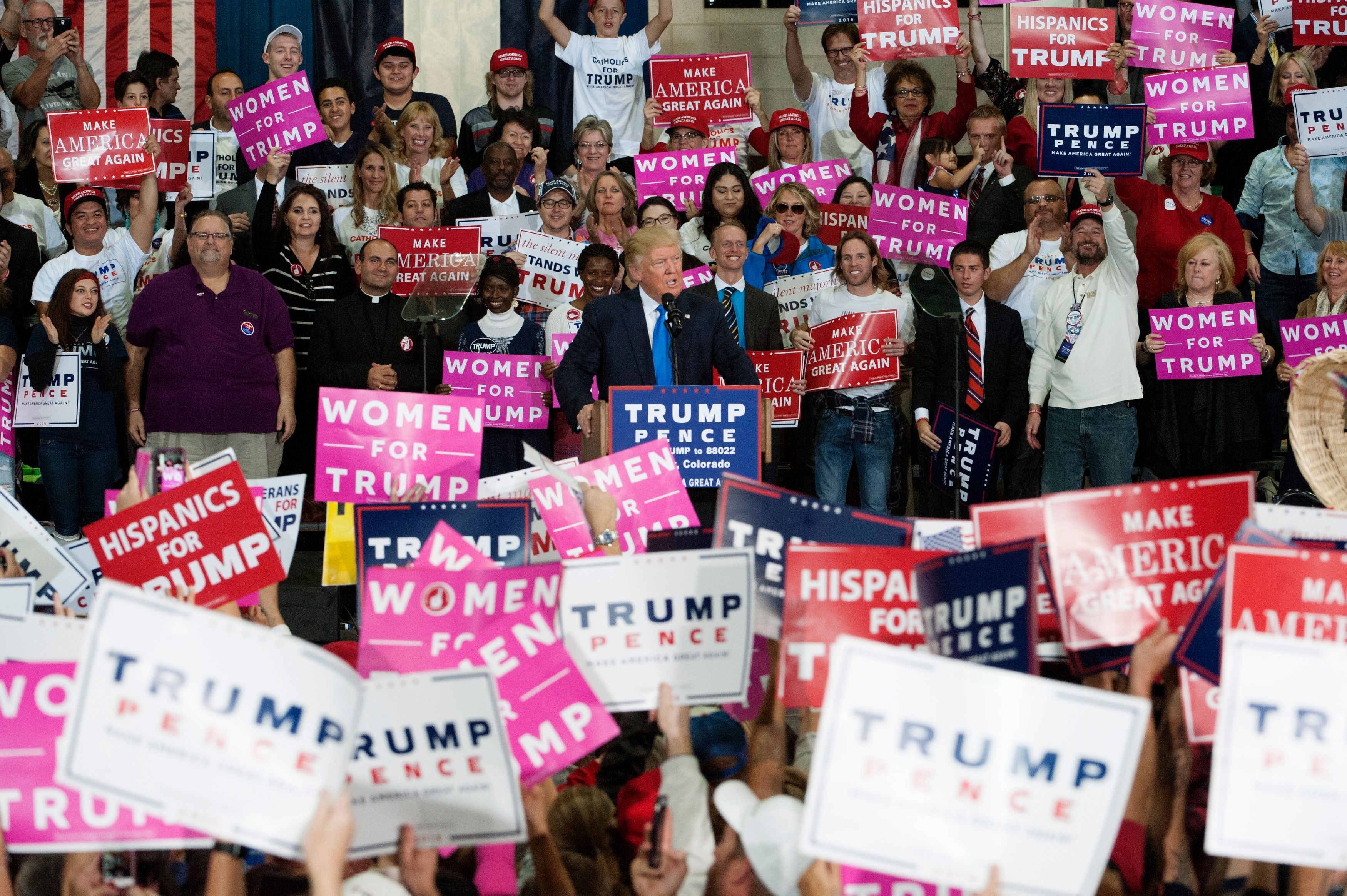
Things looked more promising after the 2018 midterms. The polls were reasonably accurate. When they did miss, they missed in both directions, meaning the polls weren't systematically biased against either party.
Then came 2020. Even though the polls accurately predicted Joe Biden would win, they underestimated Republicans' support by even more than they had four years earlier. Trump performed nearly 3 percentage points better than expected in the national popular vote and outperformed polls in individual states by more than 4 points. The miss was even bigger in Senate and gubernatorial races.
The polls bounced back in 2022, when they were more accurate than in any election in recent history, before once again underestimating Republicans in 2024 — though by a smaller margin than in either 2016 or 2020.
The pattern over the past decade has been that polls have tended to be biased against Republicans when Trump is on the ballot and reasonably on point when he's not. While that could be considered reason for optimism among Democrats, five election cycles is hardly a definitive sample.
Why the polls might be wrong
A lot of explanations have been put forward to try to understand the polling misses in recent presidential elections. The most commonly cited is the belief that MAGA Republicans, due to their general lack of trust in mainstream institutions, are less likely to pick up the phone when a polling firm calls than members of other political groups. That phenomenon, which pollsters call "nonresponse bias," can skew survey samples and make the share of Republican voters appear smaller than it really is.
"The polling is wrong. ... Republicans don't want to respond to polls anymore," House Speaker Mike Johnson told Fox News on Tuesday.
Johnson and other Republicans have pointed to some surprising survey results on the Senate side to bolster their argument that polls might be missing GOP voters. That includes Democratic leads and strong showings by independents in Senate races in deep red states like Iowa, Kansas and Nebraska. For those polls to be accurate, voter sentiment would have had to have swung as much as 23 points in Democrats' direction since the last midterm Senate contests in those states.
One pollster recently described GOP voters' nonresponse in a poll they conducted in Iowa as a "canary in the cornfields" for a potentially widespread undercounting of Republican support in the state.
Polling firms try to account for nonresponse bias by adjusting their results to give less weight to people from groups who are overrepresented in their samples, but doing so means making a lot of assumptions about the nature of a constantly evolving electorate. It's possible that the adjustments they're making this year aren't enough to accurately reflect voters' sentiments.
On top of gauging how people will vote, there's also the challenge of determining who will vote. Polls often include results for "likely" voters — voters who are expected to cast a ballot — but deciding who should fit into that category involves its own assumptions that can be wrong. Earlier this month, the polling firm YouGov released a survey showing Democrats up 16 points nationally with likely voters, a gap that YouGov itself described as "hard-to-believe."
While the major recent polling errors have been in presidential election years, data compiled by Republican pollster Patrick Ruffini suggests that the polls have also had some noteworthy misses in midterm cycles as well.
"Nationally, the polls were pretty good, but red state polls were too blue and blue state polls too red," he wrote on X.
If Ruffini's analysis is accurate, that could mean that Democrats' chances of flipping Senate seats in states like Texas, Iowa and Ohio aren't nearly as strong as they appear to be.
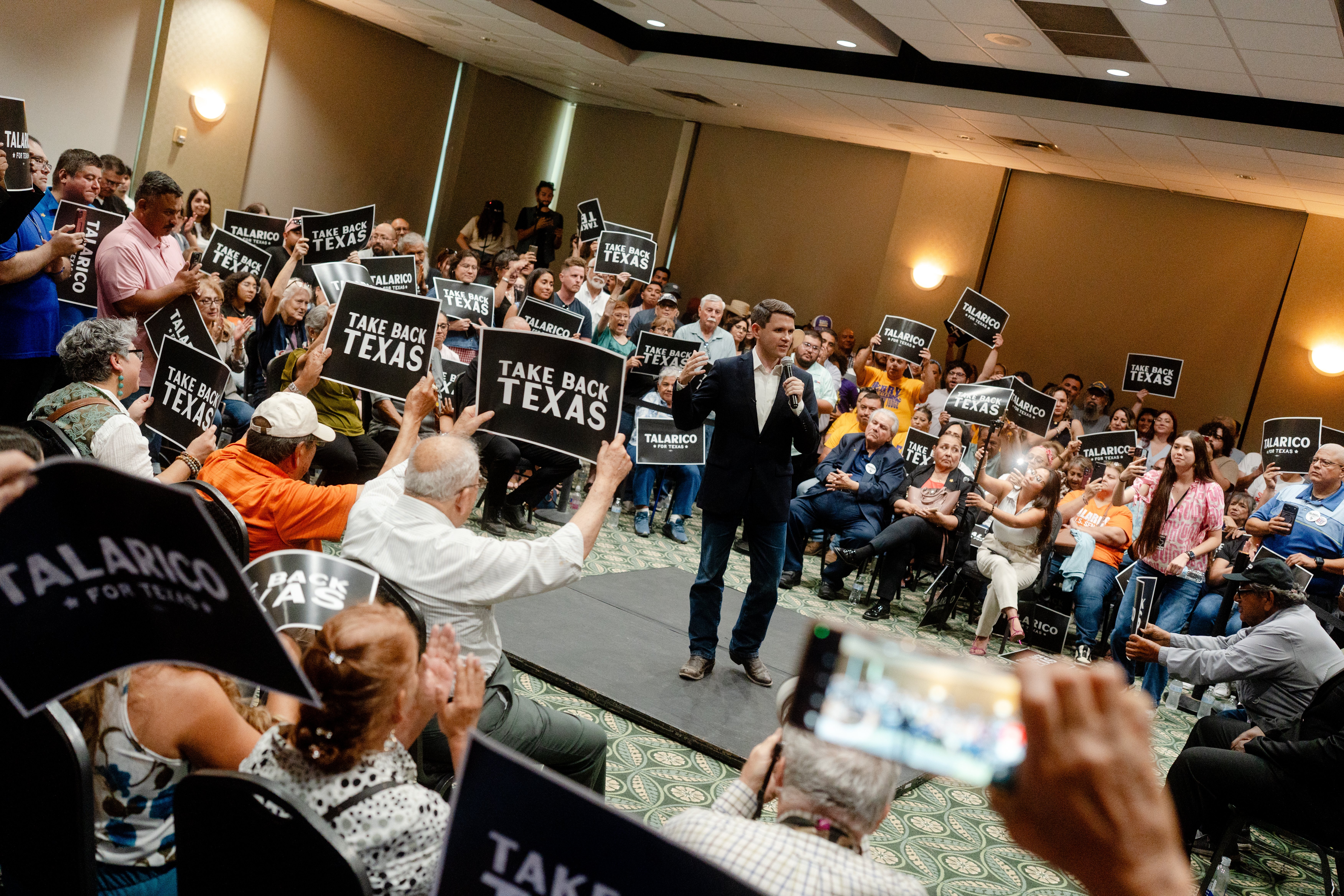
Republicans also have more room for error in the House this year thanks to redistricting. The GOP's sweeping campaign to redraw congressional maps in red states gave them up to nine new safe House seats. Democrats tried to even the score by doing their own gerrymandering. But when the dust settled, Republicans still came out ahead.
That said, Republicans might still struggle to keep their majority in the House even if the polls are off by a significant margin. On the other hand, when it comes to the Senate, the polls would only need to be off by a few points in a handful of key states for the GOP to maintain control over the chamber.
Why the polls might be right
Polling errors are commonplace; they happen in most elections. But they tend to be random and to change directions from one cycle to another.
The argument that skeptics are making this time around is that there is something fundamentally different about the Trump era — something that systematically skews all poll results involving Trump.
This has been true, to a degree, in each of the three presidential contests that Trump himself has competed in. There, the final average of polls conducted before Election Day underestimated Republicans' performance in the popular vote by an average of 3.8 percentage points, according to data journalist Nate Silver.
But there has been no systematic polling bias toward Democrats in Trump-era elections when Trump himself was not on the ballot. In fact, the polls since 2016 have overestimated Republican support in midterm elections (by an average of 0.2%) and off-year, special and runoff elections (by an average of 1.3%), according to Silver.
One possible explanation for this dynamic is that "the midterm electorate skews toward politically engaged voters who are more trusting of institutions and more likely to have answered polls," as the Atlantic recently put it. To be significantly wrong in 2026, the polls would have to be wrong in ways they weren't in 2022 and 2018.
There are other reasons to believe the polls could be right as well. While there are signs that rural Republicans are not responding to pollsters in certain states, that doesn't necessarily mean that those voters are secretly planning to show up and surprise everyone on Election Day. Instead, experts say that it might mean the opposite: that they don't want to answer questions about politics because they are not particularly enthusiastic about voting this year. Pollsters aren't seeing this "rural nonresponse" effect everywhere, either.
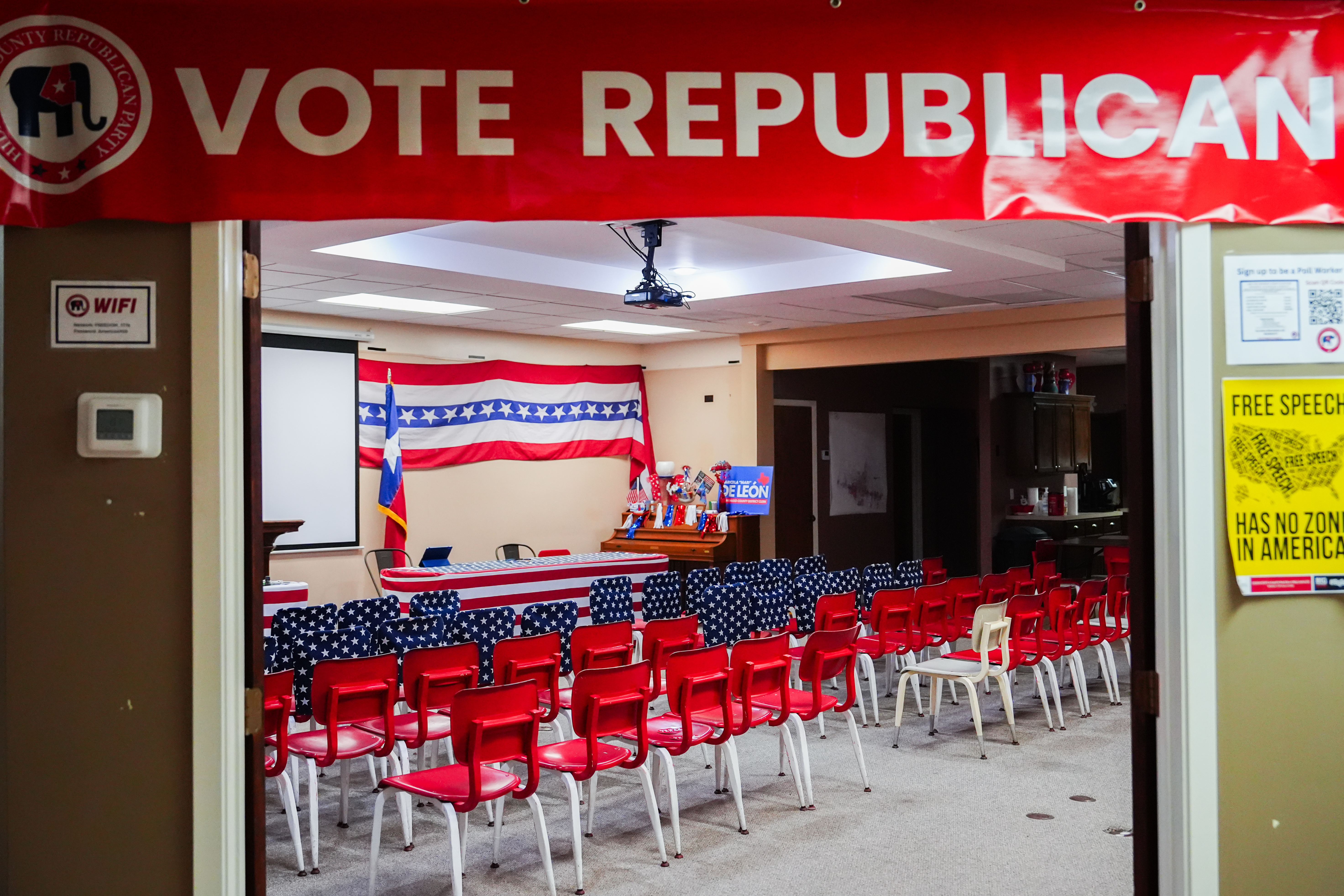
The parties are also behaving as if the polls are accurate. Republicans' spending patterns show that they are "pour[ing] money into dozens of U.S. House races previously considered 'safe,'" Reuters recently reported. Democrats are also campaigning hard in parts of the country that would typically be out of their reach.
Meanwhile, "some top congressional Republicans have privately concluded that it is likely impossible for them to keep control of the House of Representatives in the midterm elections," according to Politico.
On the Senate side, the major GOP campaign groups have reportedly cut back on spending in North Carolina and Georgia, a sign that they may be losing faith in winning those races, and rerouted the money to defend a historically safe seat in Kansas.
None of this guarantees that the polls are right. They could be rife with the same errors that have plagued them in recent elections, or have new blind spots that won't become clear until later. However, the polls currently reflect what you might expect to see in a political environment in which historical precedent suggests the party in power will struggle, the president's approval rating is low, and the parties are battling it out in what are normally deep red parts of the country.
We'll find out just how accurate the polls really are on Nov. 3.
This article originally appeared on Yahoo News at https://www.yahoo.com/news/politics/article/the-2026-midterms-polls-are-predicting-a-blue-wave-can-they-be-trusted-201329362.html
Fort Hood survivors praise Trump for scrapping execution livestream 15 Oct 2026, 2:36 pm
Survivors of the 2009 Fort Hood massacre praised President Donald Trump's decision not to livestream the execution of Nidal Hasan, after warning that broadcasting his death could turn the execution into a spectacle and hand terrorist groups a propaganda tool.
Hasan is still set to be executed by firing squad on Dec. 3, 2026, and Trump said the immediate families of his victims will be permitted to witness the execution in person. But it will no longer be broadcast to the general public as previously announced by Secretary of War Pete Hegseth.
Alonzo Lunsford, who was shot seven times by Hasan during the attack nearly 17 years ago, told Fox News Digital that Trump's decision is a "positive move."
"It proves that we are a better people, a better nation, and that we're not barbaric," Lunsford said in immediate reaction to the walk-back by Trump on Thursday. "We don't glorify such actions."
Veteran Shot 7 Times In Fort Hood Massacre Has A Warning For Americans Planning To Watch Execution
Lunsford said he supports Hasan's death sentence and execution by firing squad but drew a line at broadcasting it to the public.
"For it to be made a spectacle for everyone to witness how they're gonna do a tailgate or, 'Hey, we're gonna have a cookout and we're gonna watch this man be put to death.' No, it's not about that," Lunsford said. "It's not a spectacle. It's not a pay-per-view event or a WWE wrestling match or even a boxing match."
He also warned that footage of Hasan's execution could be seized upon by terrorist organizations.
"You don't want that to be used as a tool for Isis or al-Qaeda to recruit and say, 'Hey, this is what happens to you if you do this against the infidel,'" Lunsford said.
Julia Wilson was a civilian employee at Fort Hood when Hasan went on his rampage. She was nine months pregnant during the attack, which was carried out on her due date.
Fort Hood Shooter Should Be Executed '13 Times Over' — But Not On Live Stream, Survivor Says
She was slammed against a wall amid the chaos of the shooting and has said that it was only by the grace of God that she and her then-unborn son survived.
Wilson was already against the livestreaming of Hasan's execution because she didn't want others to be traumatized like she was during the deadly attack.
"I'm ecstatic about that," she told Fox News Digital, reacting to the news that the plan to livestream the event would not proceed.

"I'm worried about other people's mental health," she continued. "I don't think the government… really put a lot of thought into how this was going to go down and how it was going to transpire until today."
"I don't think they really thought about how this may affect people," said Wilson. "Seeing something like that affects your mental health. I don't care who you are. I don't care what you've seen. Seeing someone murdered in front of you or killed in front of you affects your mental health, whether they deserve it or not."
Wilson also worried that if the livestream had proceeded, it would exist online forever, and that children might discover it while searching the web. "Once it's on out there, it's out there," she said.
Trump said Wednesday that he believed publicly broadcasting Hasan's death could have served as a deterrent, but ultimately sided with those who opposed making the execution available for anyone to watch.
"I think streaming the execution for all to see might have been a strong deterrent for the World to witness how America deals with Terrorists and SCUM like Hasan but, many very good and well meaning people would rather not watch him die, through streaming, or through any other visual device," Trump wrote on Truth Social.
"He will die, as scheduled, by firing squad, but this event will not be streamed," Trump continued. "That said, the execution may be viewed in person by the immediate families of the victims, if they so choose. They deserve to witness JUSTICE!"
Lunsford pointed to warnings surrounding Hasan before the shooting and criticized the Army's handling of the future attacker before he was transferred from Walter Reed to Fort Hood.
"We knew this guy had issues," Lunsford said. "If you are privy to the ticking time bomb report, you will see what he was talking about. This guy had issues and they just passed the buck and moved him from Walter Reed to Fort Hood."
Lunsford wondered what might have happened had Hasan deployed overseas before carrying out an attack.
"Suppose he would have did the deed once he got in country on a FOB, a forward operating base," he said. "Imagine how many American lives would have been lost then."
For Lunsford, allowing victims to witness Hasan's execution remains important even without a public broadcast.
"It's gonna be a traumatic thing for, at least for the families of the fallen," he said. "They'll be able to close the chapter and hopefully close the book."
Click Here To Download The Fox News App
Lunsford said survivors will continue to live with reminders of the attack long after Hasan is gone.
"Every day we get up, we come to the VA hospital or we have to take our meds in the morning or we get ready to do something that we normally would have been doing prior to 5 November '09 that we're no longer able to do now, that's a constant reminder," he said.
"I am no longer a victim of his," Lunsford added. "I'm a survivor."
Original article source: Fort Hood survivors praise Trump for scrapping Hasan execution livestream: ‘We’re not barbaric’
This article originally appeared on Fox News at https://www.foxnews.com/politics/fort-hood-survivors-praise-trump-scrapping-hasan-execution-livestream-not-barbaricCar payments just hit a record $787 a month—and 1 in 4 new-car buyers is now signing a 7-year loan 14 Oct 2026, 9:13 am
American drivers face a daunting market. The average monthly payment on a financed new car hit a record $787 in the third quarter, according to Edmunds, up from $777 in the second quarter and $756 a year earlier.
Buyers are also borrowing more than ever. The average amount financed climbed to a record $44,664, while the average new vehicle sold for $50,562 in September, per Kelley Blue Book, just $52 shy of the all-time high. Nationwide, auto loan balances reached $1.71 trillion in the second quarter, according to the New York Fed, roughly 56% more than a decade earlier.
For Joseph Yoon, consumer insights analyst at Edmunds, the math is brutally simple: Vehicle prices sit near record highs, and interest rates remain stubbornly elevated, with the average new-car APR holding at 7%.
“Mix those things together and then you get record-high monthly payments,” Yoon told Fortune. “Just how the math works out.”
The road that led to record car payments
So how exactly did we arrive here? Yoon points to the pandemic as a significant precursor to the state of car sales. When factories shut down and parts ran short, manufacturers faced a choice: build fewer cars, or build the ones with higher margins. They chose the latter.
“Automakers realize, ‘Hey, even if we lose a couple million units across the board, if we have high margins, our profits look great,’” Yoon said. “And that’s perfectly fine. But as consumers, we drew the short straw, and have to pay for elevated prices.”
The result: New vehicles now cost about 30% more than they did six years ago, as Fortune has reported.
For buyers struggling to afford today’s prices, the dealership finance office offers a tempting solution: stretch the loan.
Indeed, a record share of new-car buyers decided that a seven-year loan sounded less scary than the alternative. In the third quarter, 25.5% of financed new-car purchases carried terms of 84 months or more, according to Edmunds, up from 23.9% the prior quarter and 21.8% a year earlier. Even so, a record 21.2% of buyers committed to monthly payments of $1,000 or more.
But longer terms carry consequences, some of which aren’t immediately obvious.
“The longer you have a loan term, technically the longer you’re paying just toward interest, not toward the principal of the loan, especially when the interest rates are so high,” Yoon said.
The average amount of interest paid over the life of a new-car loan reached a record $9,938 in the third quarter, up from $9,442 a year earlier, Edmunds found. That increase came even though rates didn’t budge; Edmunds attributed it to buyers financing larger amounts over longer periods.
Helen Colby, an assistant teaching professor at Carnegie Mellon University’s Tepper School of Business, told Fortune that the true cost of an 84-month loan can go well beyond the accumulation of interest.
“For borrowers who already have tight budgets, getting such a long loan means committing themselves to five, six, or even seven years of increased spending that will reduce their budget for other things like vacations, savings, or even necessities like food and clothing,” Colby said.
And there are no signs of imminent relief. The average APR on new-car loans was 7% in the third quarter, unchanged from the previous quarter and a year earlier.
“Especially towards the end of the year, I don’t think anything’s going to change,” Yoon said.
Are car buyers reaching a breaking point?
Logic would suggest that at a certain point, buyers would simply refuse to pay such prices for cars. If there is a tipping point, though, it’s still on the horizon, Yoon said.
“We keep thinking that there might be some type of tipping point. Are sales going to crater? And we haven’t seen anything like that. Sales are fine,” Yoon said. “Despite these record prices, despite the kind of overall ‘bad vibes’ in the economy for most people, car sales haven’t really suffered all that much, if at all.”
Edmunds’ head of insights, Jessica Caldwell, called the latest data “a remarkable display of consumer resilience” in the company’s quarterly report.
The reason points to a phenomenon economists call the “K-shaped economy.” “The people that are buying new cars tend to be households with six-figure incomes,” Yoon said. The share of new-car buyers earning less than $100,000 fell to 37% last year from 50% in 2020, according to Cox Automotive. So although many people feel priced out of a new car, there’s no shortage of buyers at the top to make up the difference.
Buyers at the bottom of the K-shaped economy feel the pinch
Fortune spoke with one person feeling the crunch of the new-car market. Abbey Burbach, 35, said she can’t afford a new car despite working three jobs totaling 50 to 60 hours a week. “You’re lucky to find a new car for under $400 a month anymore.”
Burbach said most of her peers who drive newer-model cars didn’t buy them; they inherited them from benevolent elders. “I know a lot of people who basically begged their parents not to trade in their car,” she said.
The trend is more than anecdotal, Yoon said: The average age of a new-car buyer has been rising. “It was on a downward trend for a while, but it’s gone up the last couple of years because, again, young people in this kind of market are finding it more and more difficult to be able to buy a car.”
The used car market offers little relief
For buyers priced out of new cars, the used market has always been the fallback plan. That calculus isn’t so simple anymore.
When new-car inventory dried up during the pandemic, buyers flooded the used market instead, and prices responded quickly, Yoon said. The average used-vehicle transaction price rose from $20,942 in the second quarter of 2020 to $27,306 by the third quarter of 2021, according to Edmunds data. Today, used-car buyers who finance borrow an average of $30,703 at a 10.6% APR, Edmunds says.
Those prices have largely stayed put, thanks in part to a slump in leasing. Before the pandemic, leases made up roughly 30% of new-vehicle deals, according to J.D. Power. That share fell to 17% during the shortage and had recovered only to about 23% in the first half of 2026, the firm’s data shows.
Why does it matter? Because leased cars are a primary source of used inventory for dealers once they’re returned.
“These cars come back within 24 to 48 months, or typically 36 months,” Yoon said. “And when that source dries up, literally millions of used cars that are supposed to come back to dealer lots every year aren’t coming back anymore. That has had a pretty dramatic impact on pricing used cars.”
Some help is on the way: Off-lease volume is expected to climb to about 2.66 million vehicles this year and 3.29 million in 2027, up from roughly 2.15 million in 2025, according to Experian estimates cited by JPMorgan. For now, though, buyers are still feeling the squeeze from every direction.
“We have this huge revolving circle of negative effects on the market for the consumer,” Yoon said. “There’s nowhere you can catch a break.”
This story was originally featured on Fortune.com
This article originally appeared on Fortune at https://finance.yahoo.com/economy/articles/car-payments-just-hit-record-141354915.html
Page processed in 0.877 seconds.
Powered by SimplePie 1.3.1, Build 20131001021811. Run the SimplePie Compatibility Test. SimplePie is © 2004–2026, Ryan Parman and Geoffrey Sneddon, and licensed under the BSD License.